Birmingham Churches and Their Cornerstones 97
Our Lady of Sorrows was the second church Roman Catholic Church organized within the bounds of nineteenth-century Birmingham. The first was St. Paul’s, which is located in the heart of the city on the north side of the railroad tracks. Our Lady of Sorrows was organized in 1887 on the south side of the tracks and so served later immigrants to Birmingham, including German speakers. The cornerstone pictured below belonged to its 1902 building which was located on the southwest corner of Sixth Avenue South and 14th Street, where the University of Alabama’s Bartow Arena is now.
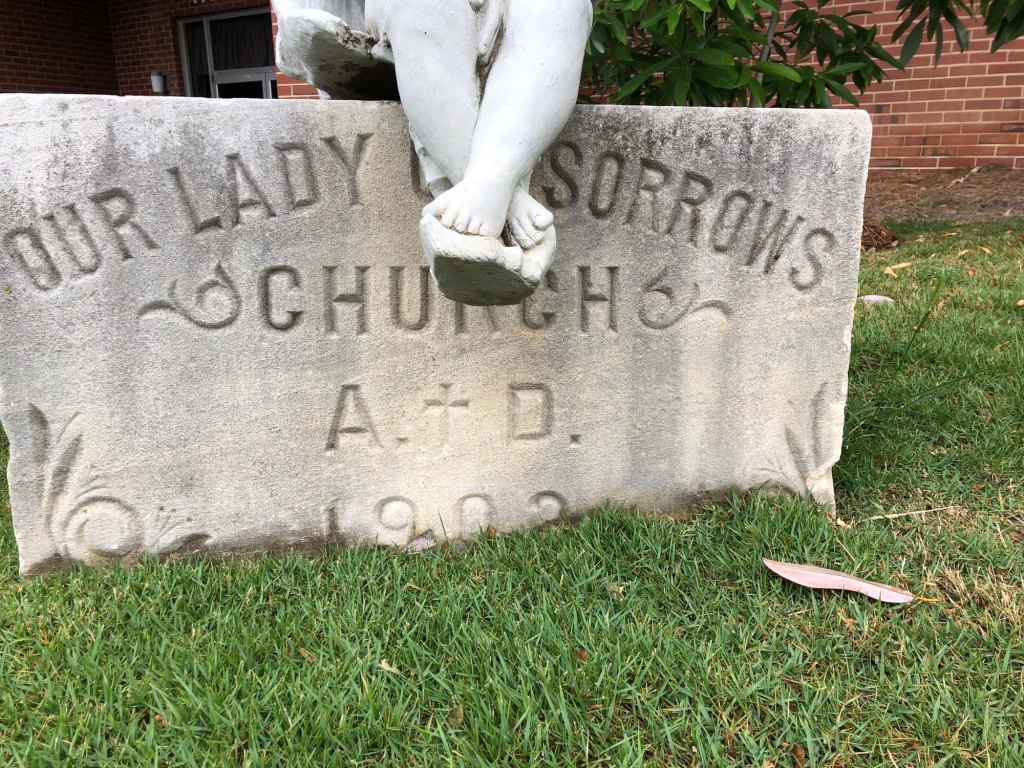
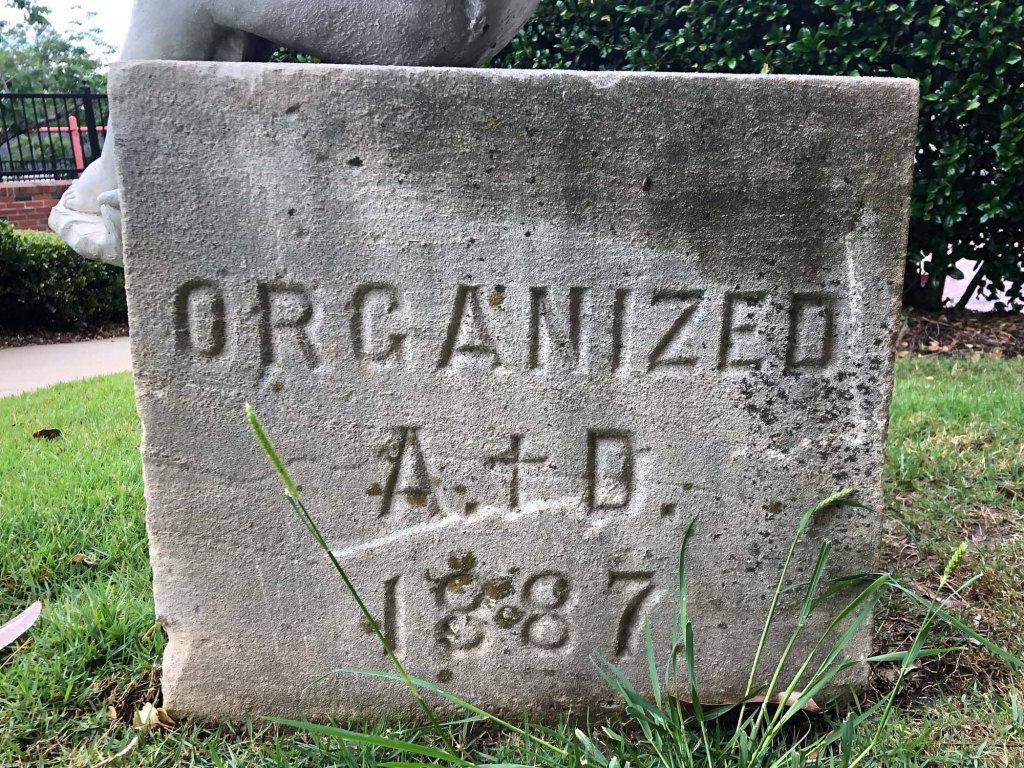
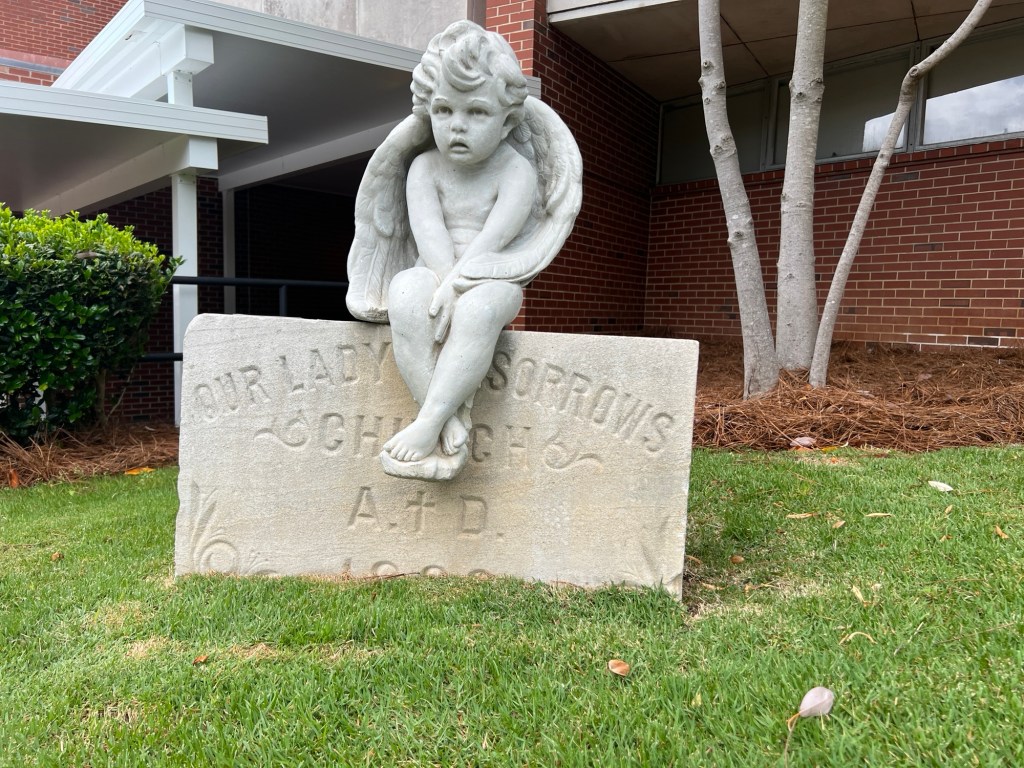
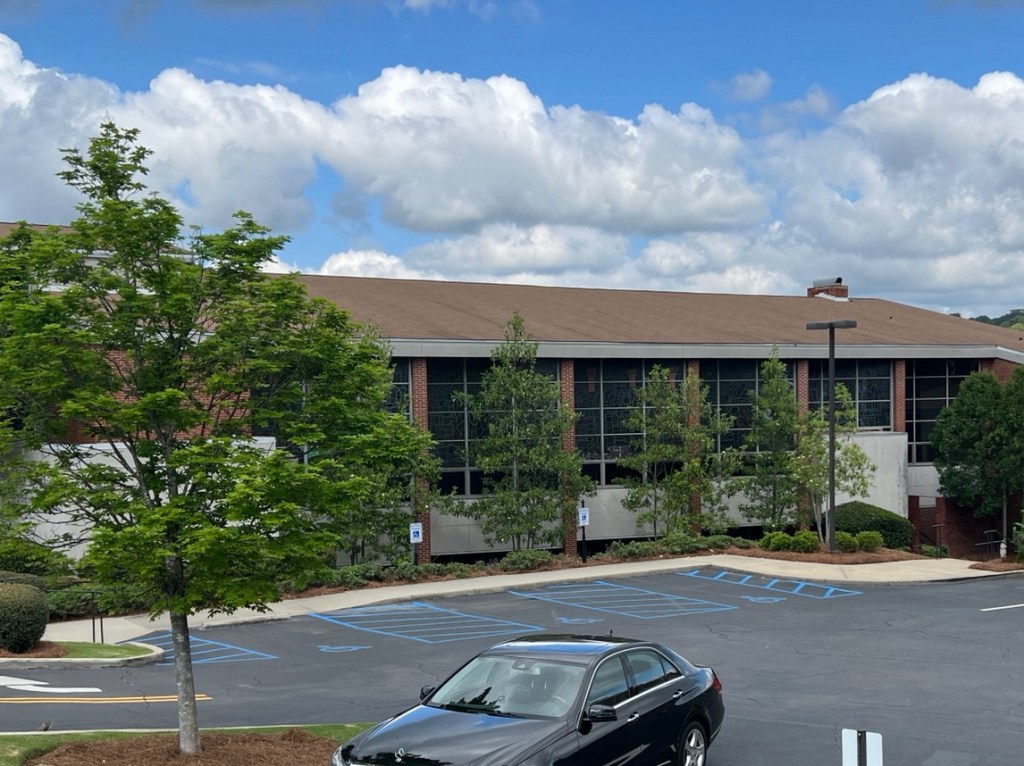
This building caught fire in 1949 and the congregation took the opprotunity to move to another site within its parish, this time over the mountain in the growing suburb of Homewood. The new church opened in 1959. It was designed by Charles McCauley and embranced a modern design that included side windows that focused light on the altar in the manner of the new Coventry Cathedral by Basil Spence which was under construction in England at the same time. Like McCauley’s four post-war altar-centered Gothic revival churches in town, Our Lady of Sorrows features a single nave without structural ailses, but that is where the similarities end. Whereas they, such as All Saints’ Episcopal down the street, are somewhat long and narrow, this church is wide.
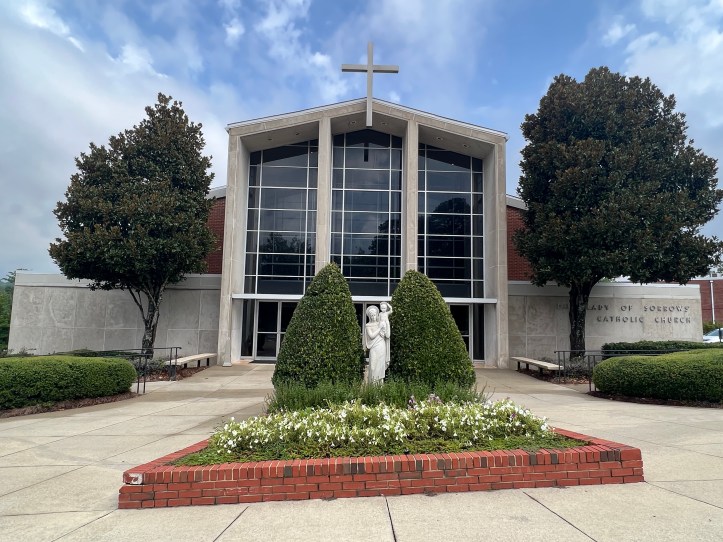
The older church was rebuilt with funds from Bishop Fulton Sheen to serve as the new home of the city’s African American Roman Catholic congregation. When it moved its name was changed from Immaculate Conception to Our Lady of Fatima at Sheen’s request. I’m not sure when the cornerstone was removed from the burned building. It may not have been until Our Lady of Faitma itself moved in 1969 and that may be why the stone sits on a grassy patch beside the church.
For more information on Our Lady of Sorrows, see its entry in Bhamwiki. Read this first post for more on this series on Birmingham churches and their cornerstones.
Map of Posts in this Project
This is an interactive map. Clicking on any marker will enable you to access a link to the post of the church. The type of marker corresponds to the type of cornerstone at the site. Stones with dates and at most one individual’s name, like this, are light blue. Click here for full information on the markers.
 Chasing Churches
[…] Presbyterian Church moved to Homewood from the same Southside neighborhood in Birmingham as Our Lady of Sorrows Catholic Church (# 98 in this series). It is useful to compare their […]
LikeLike