Birmingham Churches and Their Cornerstones 101
Since 1963, Second Presbyterian Church has stood just south of Shades Creek in Homewod on Columbiana Road. For much of this time, the cornerstone of its former church building sat on the new church’s front porch.
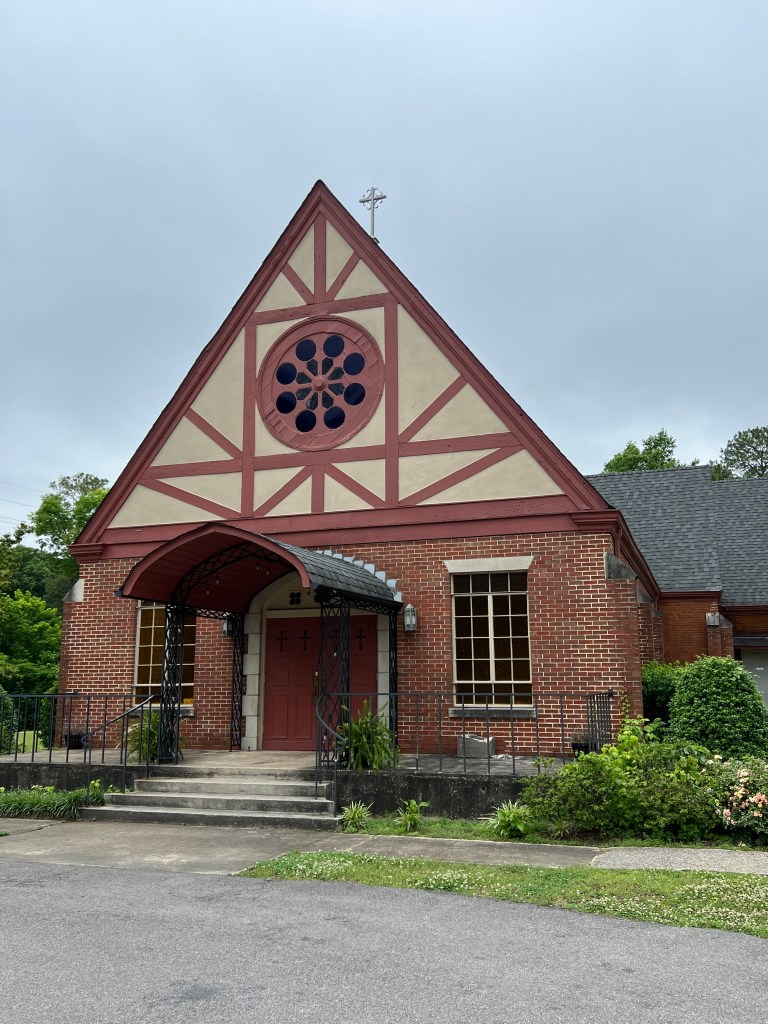
The Columbiana Road building is now in the process of being sold: part of the land to a developer who will build a medical office buidling and the church building itself to Grace Fellowship Church, an independent evangelical congregation that has also been worshiping in the building in the afternoons for about seven years. Second’s memebership had never been very large and had become very small. It is in the process of merging with Edgewood Presbyterian Church.
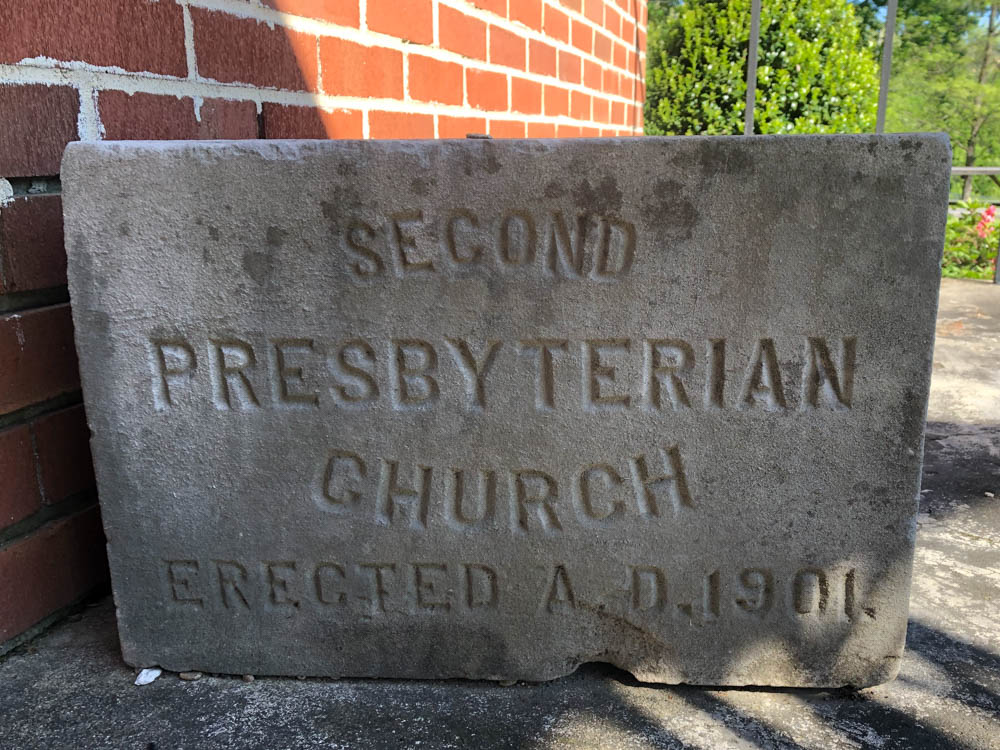
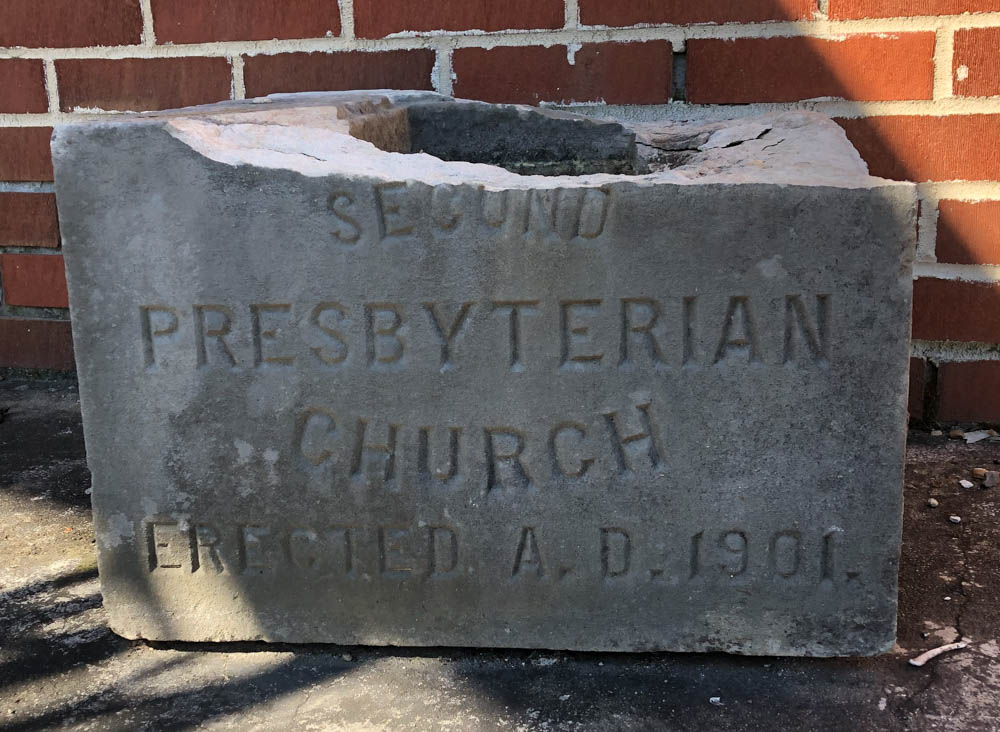
Second Presbyterian Church moved to Homewood from the same Southside neighborhood in Birmingham as Our Lady of Sorrows Catholic Church (# 98 in this series). It is useful to compare their stories:
- Both were their denomination’s second congregation in Birmingham. Second Presbyterian’s story began in 1882, Our Lady of Sorrows (OLS) five years later in 1887.
- Both relocated to Homewood in the decades after World War II. OLS after a fire in 1949, Second Presbyterian in 1963 because of neighborhood change.
- Both had erected the Southside buildings from which they moved in 1901/1902.
- Both of their Southside church sites were used by African American congregations after their move: Second’s by New Hope Baptist Church, OLS’s by Our Lady of Fatima Catholic Church.
- Both of these African American congregations moved to Birmingham’s west side in the early 1970s and their sites were aquired by UAB.
- Both Second and OLS recovered their cornerstones from the Southside buildings and displayed them outside the Homewood churches.
- Both hosted popular weekday educational programs: OLS, its own parochial school; Second, ABC Child Development Center.
But that is where the similarities end.
- OLS relocated within its territorial parish and was the first Roman Catholic church building located in Birmingham’s over-the-mountain suburbs. When Second Presbyterian moved over the mountain it became the fourth Presbyterian church in or immediately adjacent to Homewood. It is true that these belonged to three different Presbyterian denominations and that the other one in Second’s own denomination (the Presbyterian Church in the U.S.) was just outside of the Homewood city limits in Mountain Brook. Nevertheless, Second was not the pioneer over the mountain that OLS was.
- OLS moved first and then completed its new building. Second moved when its sanctuary was ready. (Later additions were added.)
- OLS build an innovative modernist building. Second built a Tudor-Revival structure that echoed aspects of its previous Romanesque-revival building.
- OLS’s new building was in the heart of Homewood on its busy Oxmoor Road where many churches are located. Second Presbyterian stood by itself on a suburban highway.
- Second’s Southside building still stands and is used by UAB for its honors program. It is on the National Register of Historic Places. OLS’s was razed for UAB’s basketball arena and even its adjoining cemetery was moved.
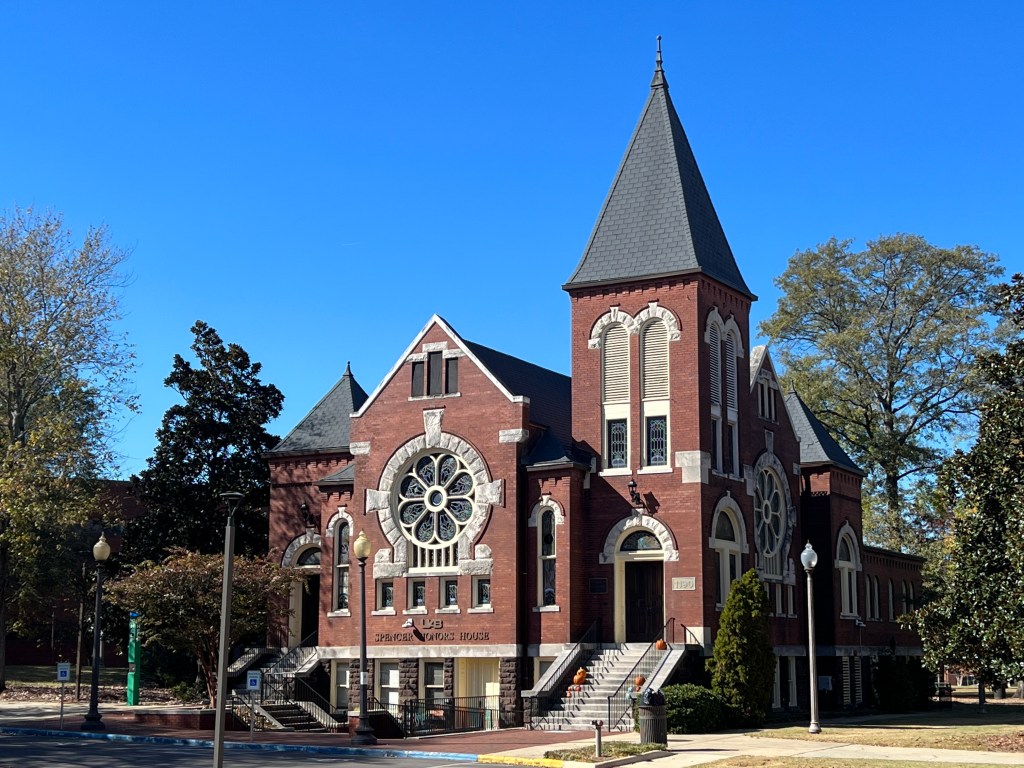
Some of these differences, particularly the first, shaped their different histories, namely that Second has closed and is merging and that OLS survives. One can also note the creation in 1978 or yet another Presbyterian church in Homewood, Covenant Presbyterian Church. While its identity was linked to the more conservative Presbyterian Church in America, that is not always the deciding factor when people are choosing churches. Covenant provided another traditional paedeo-baptist church in Homewood. That may have been its main impact.
Second’s old building has a blank stone where the cornerstone once was. I assume the cornerstone itself is now in the safe keeping of Edgewood Presbyterian or one of the members of Second.
It is important to note, that the survival of Second’s church building to continue to serve Grace Fellowship and the day care is the product of a signfiicant community outcry at a rezoning meeting. Second had initially intended to sell the whole site to the commercial developer but given the depth of community concern worked out a plan to divide the property and allow Grace Fellowship to purchase the now-sixty-year-old church building.
For more information on Second Presbyterian see its entry in Bhamwiki. Read this first post for more on this series on Birmingham churches and their cornerstones.
Map of Posts in this Project
This is an interactive map. Clicking on any marker will enable you to access a link to the post of the church. The type of marker corresponds to the type of cornerstone at the site. Stones with dates and at most one individual’s name, like this, are light blue. Sites where the stone has been removed, like the old Second Presbyterian building, are light gray. Click here for full information on the markers.

