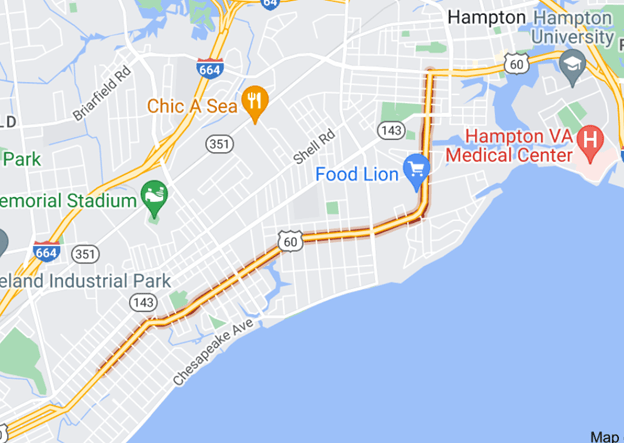
From Downtown Hampton, Virginia, to the Newport News city line, US-60 follows Kecoughtan Road. (Pronounced Kick-uh-TAN.) Opened as the first hard-surface road between Hampton and Newport News in 1910, it is one of the Virginia Peninsula’s older suburban roads and is lined with twenty current houses of worship. Most, if not all, of the buildings erected for worship still stand, but many have changed hands and several store-front churches have come and gone. Kecoughtan Road was the “main street” of my childhood, and the denominational diversity there was something I took as a given and something the students I now teach (Baptist, Methodist, Presbyterian, and non-denominational) have difficulty understanding. I’ve discussed the three of these churches closest to my house (and 2 others a block of the road) in an earlier post.
This post is the first in a series that will document all churches along US-60 from the beginning of Kecoughtan Road westward to downtown Newport News, where US-60 turns up Warwick Boulevard to head up the James River to Williamsburg and beyond. The first photos of churches here were taken in summer 2022, the last used in this series in 2023. But other priorities kept me from beginning to post these until December 2024. So if you like this, and want to see the rest, let me know.
Memorial Baptist Church
Headed west on US-60 from downtown Hampton, one travels south on a section of Kecoughtan Road originally known as Jackson Street. This was within the old boundaries of the City of Hampton and predates the 1910 completion of Kecoughtan. The first church one sees is Memorial Baptist Church. It is a block off Kecoughtan, but the houses and high school that once separated it from Kecoughtan are gone. It is now very visible. Completed in 1904, it’s a classic neo-medieval auditorium church, a variety of American church architecture brilliantly analyzed by my friend Jeanne Halgren Kilde in When Church Became Theatre: The Transformation of Evangelical Architecture and Worship in Nineteenth-Century
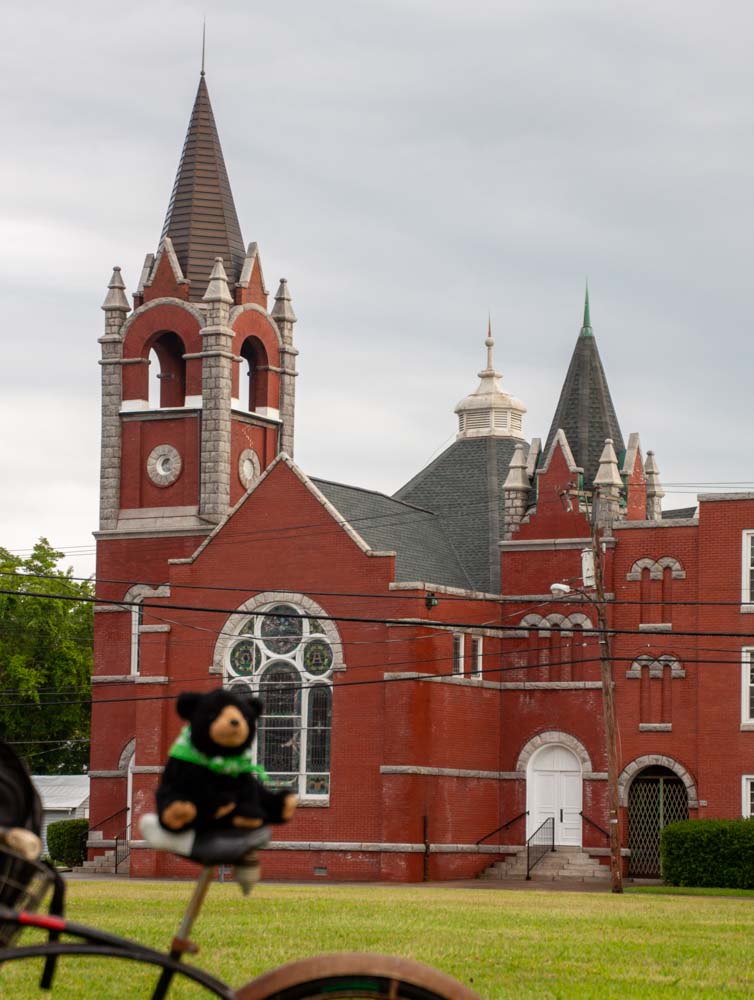
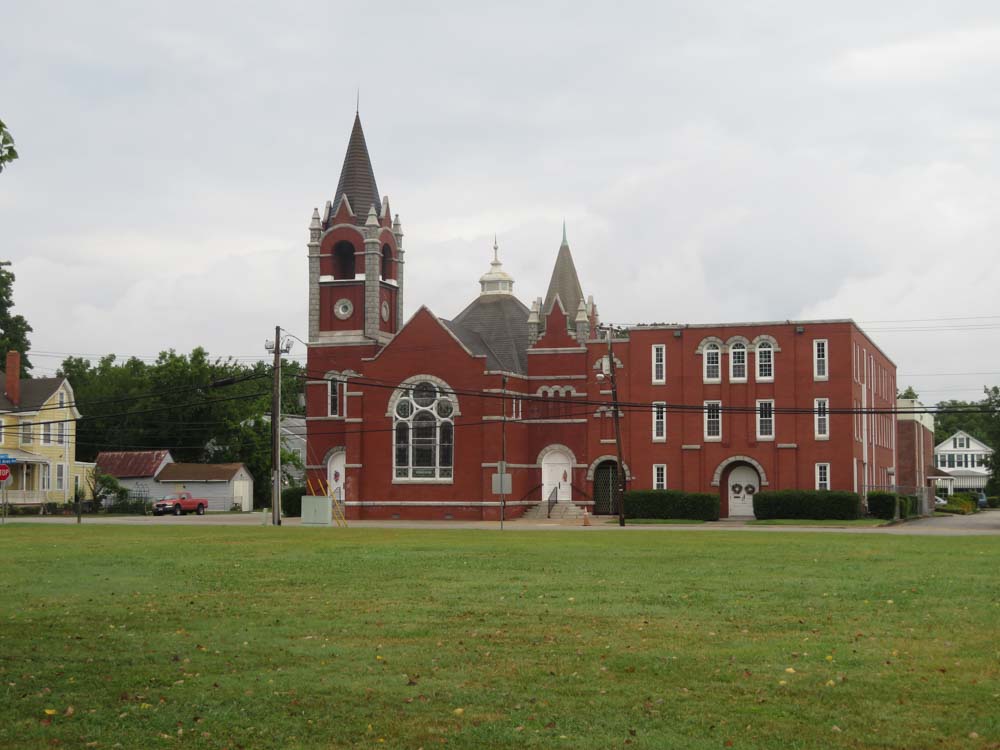
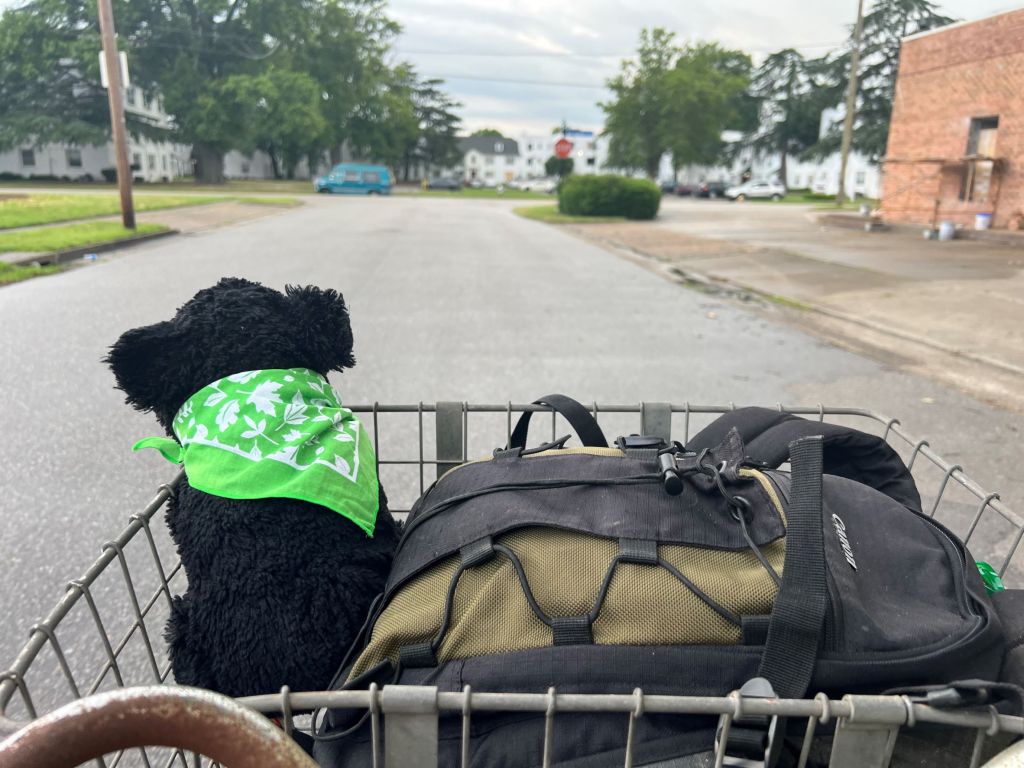
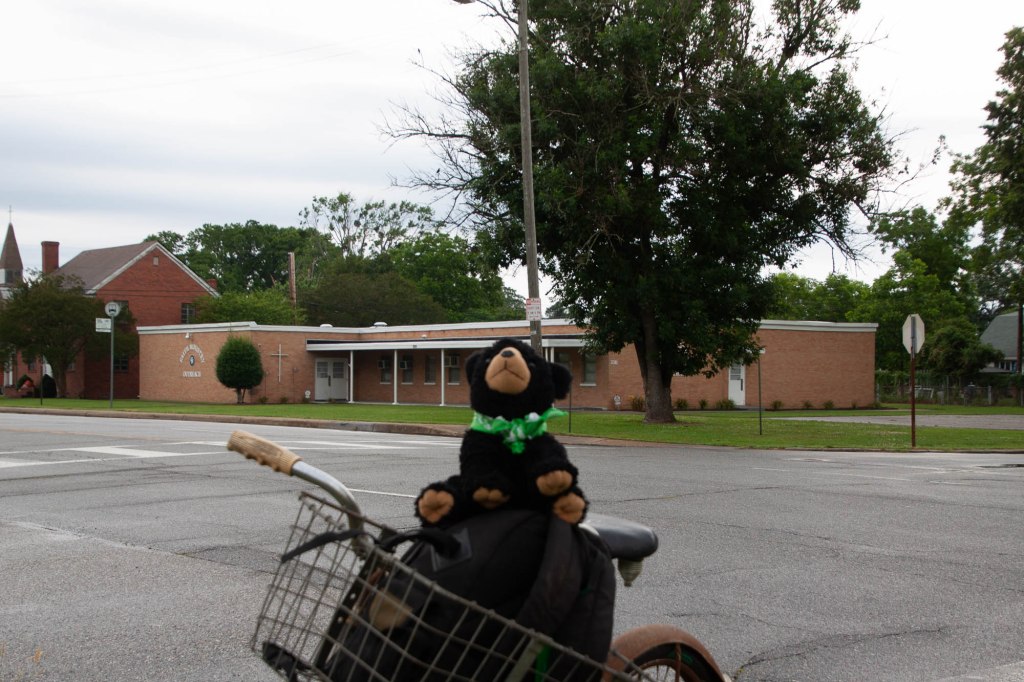
The stuffed animal in the photo, is Winter. She’s a black bear from Yosemite and has been my “model” in several series of church photos. Winter and I traveled the whole route on a Schwinn Corvette II. A classic “paper-boy” bike that my dad bought for my grandfather in the 1960s. Winter rode in the basket with my camera bag. (I also remember riding in the basket down the sea wall on Chesapeake Boulevard.) I decided to go “old school” and use my (digital) SLR for this series instead of my iPhone. Did it make a difference? You can judge by comparing alphabets of churches I shot with the iPhone in London, Hampton, Newport News, and Birmingham, Alabama. Be sure to look for Winter in all the church photos. She sometimes hides, but is always there.
Little England Chapel
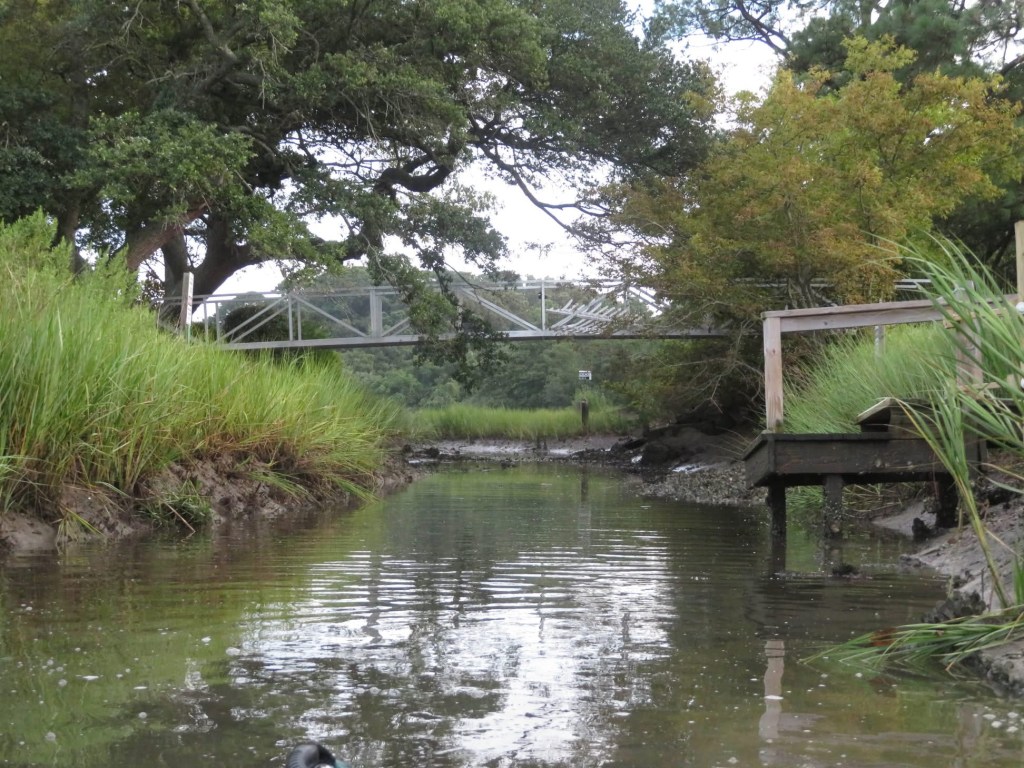
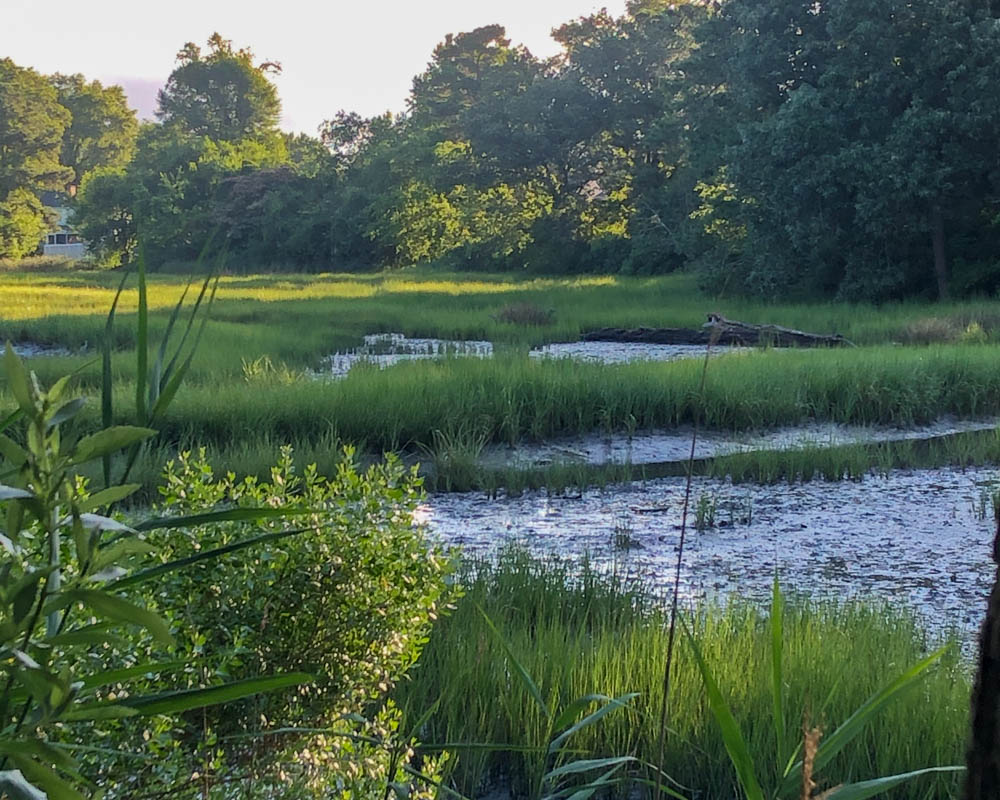
Until Kecoughtan was built, if you were traveling to our next church by land you would need to head west to cross the upper reach of Herbert’s Creek and then back to the southeast on the dotted path on the left-hand map below, which became Ivy Home Road. When Kecoughtan was built, Herbert’s Creek (now known as Sunset Creek) was bridged. In fact the bridge is really just a culvert, you hardly notice the creek on the west side of Kecoughtan. I looks like the now dredged creek simply ends on the east side of the highway. Since Kecoughtan Road runs so close to Hampton River and the harbor, this is just one of many creeks that had to be crossed or filled in. These two maps show the difference. Kecoughtan Road/Jackson Street is the street between the “M” and “P” in Hampton. on the older map.
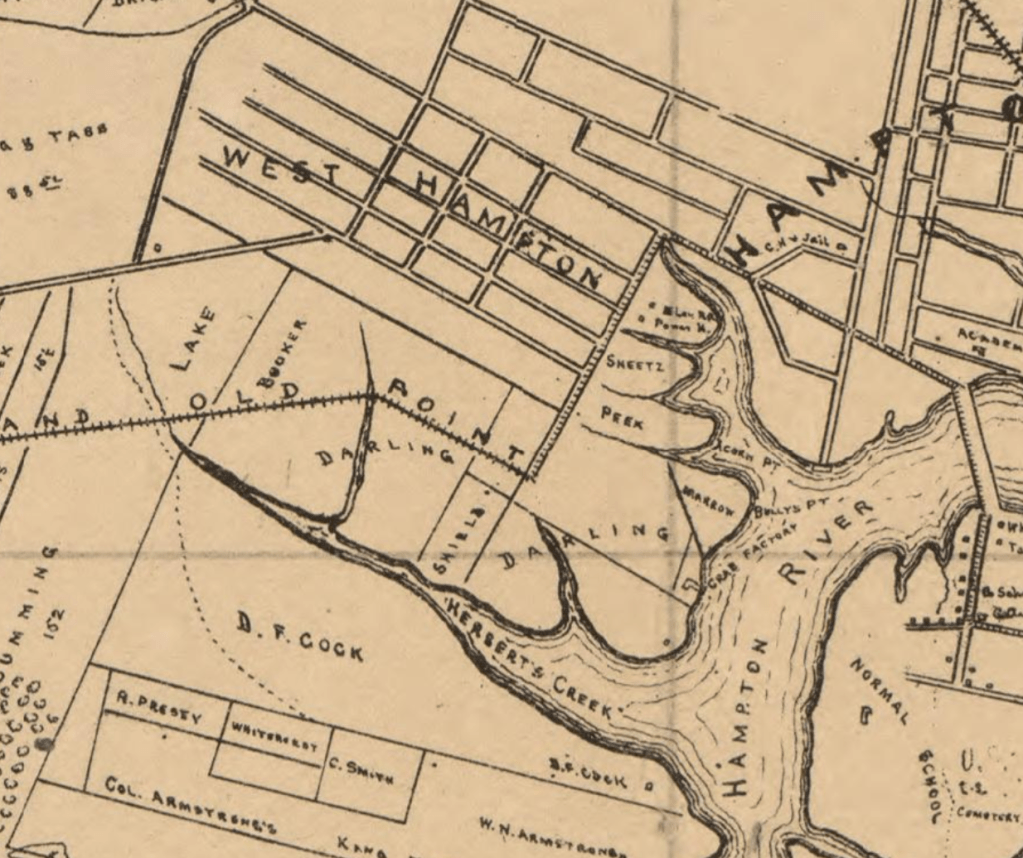
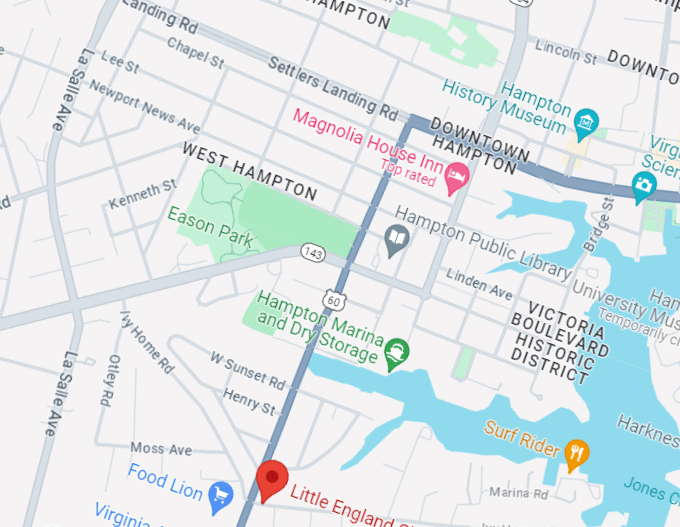
The church is Little England Chapel, a white clapboard building whose main section was erected in 1879. It was built by students from Hampton Normal and Agricultural Institute (now Hampton University) who were educating and ministering to the freedpeople in the area known as Newtown. Until 1989 it was used for regular worship and into the 1970s was the only African American church on Kecoughtan. Since 1989 it has been restored and a community center that echoes the chapel’s architecture built across the street. The chapel was added to the National Register of Historic Places in 1982.
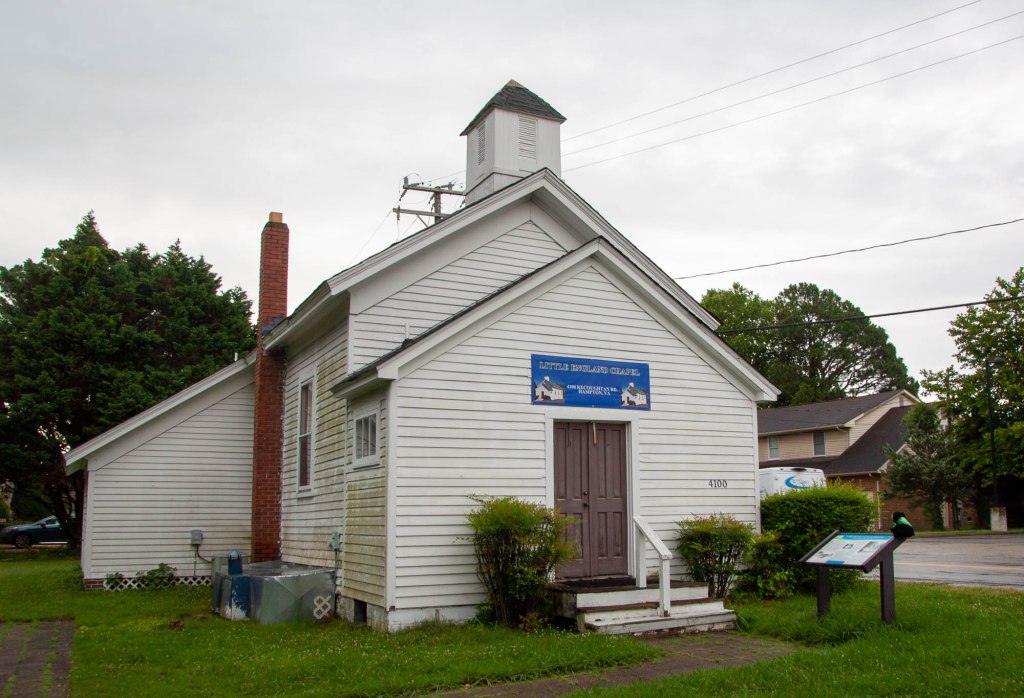
Visible here are additions to the front and back of the chapel that were retained in the restoration.
Church Creek
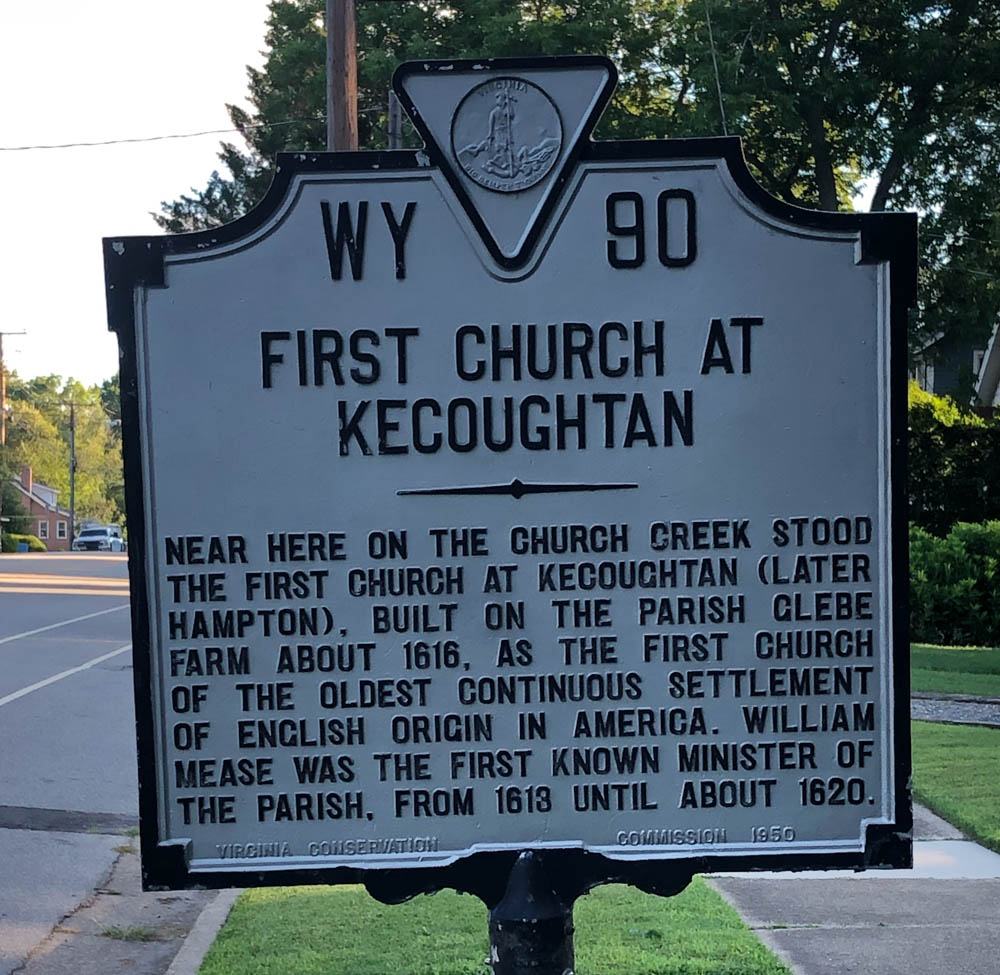
The second creek or marsh the builders of Kecoughtan Road had to ford was Church Creek. Today, you don’t see the creek from the road, but you do see Church Creek Apartments. The marshy creek is behind the apartments. Church Creek is named for the first church erected within Hampton’s limits. It is remembered as “The First Church at Kecoughtan” by a marker about a quater-mile down La Salle Avenue its intersection with Kecoughtan. The church was built about 1616 and used for perhaps eight years until a new church for the parish was built on the east side of Hampton River near the present Hampton University. That site, and the third site, on Pembroke Avenue are both preserved. The first church site is not. Since 1724 the church has been located at its present site in downtown Hampton and since 1830 known as St. John’s Episcopal Church.
Hampton Roads Seventh-Day Adventist Church
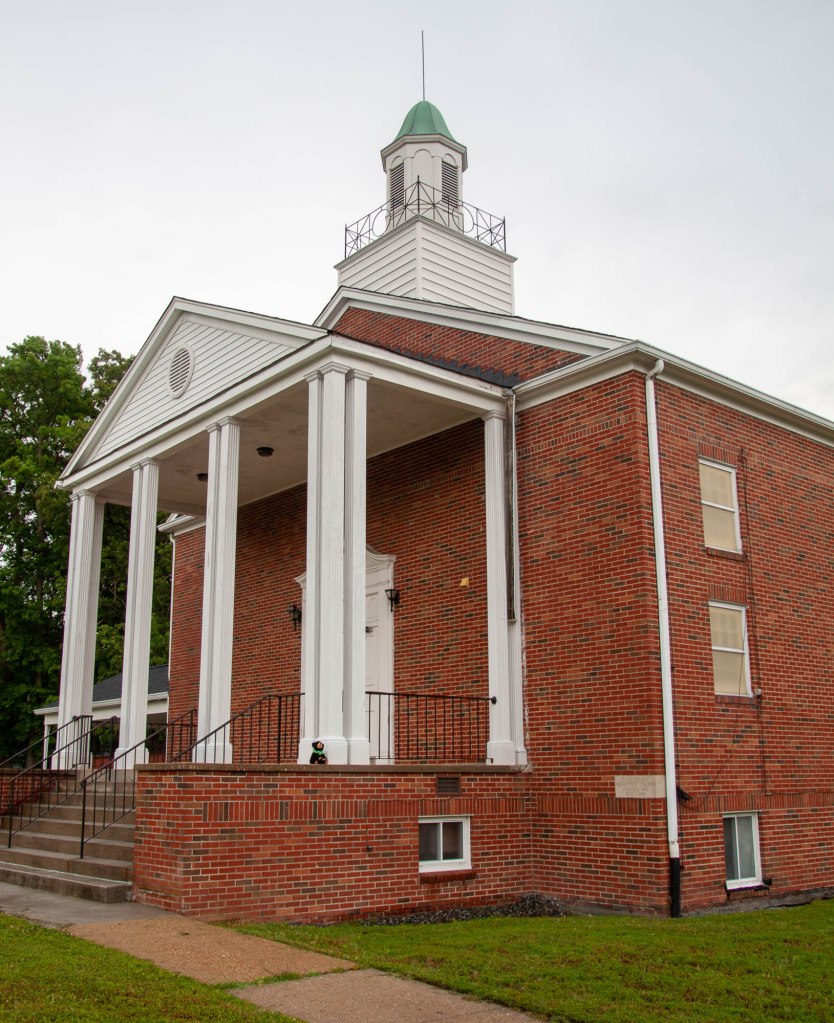
Almost a mile from the Little England Chapel one arrives at the handsome 1955 colonial-revival home of Hampton Roads Seventh-Day Adventist Church. The congregation was organized in 1899. There won’t be another building erected before 1980 and still used by its original congregation for another mile.
The name “Hampton Roads” may seem curious. It is what English settlers in the seventeenth century named the harbor that is two blocks south of the church. The land where the church sits was first developed in 1893 as the Hampton Roads Golf and Country Club. It was Virginia’s first golf course! When the nine-hole course was converted into a residential subdivision, the name “Hampton Roads” was retained for the neighborhood and used by the church. Only did Hampton Roads become the most common name of the metropolitan area that includes both sides of the harbor..
Faith Ministry Outreach
Catty-corner from the Adventist church is the one-story structure housing Faith Ministry Outreach. It was erected as Emmanuel Lutheran School. It offered education for children in the lower grades of elementary school.
Emmanuel Grace Baptist Church
At the other end of the block is the former building of Emmanuel Lutheran Church. It is now the home of Emmanuel Grace Baptist Church. (Fun fact: when I was 10, I was in my first wedding in this church.)
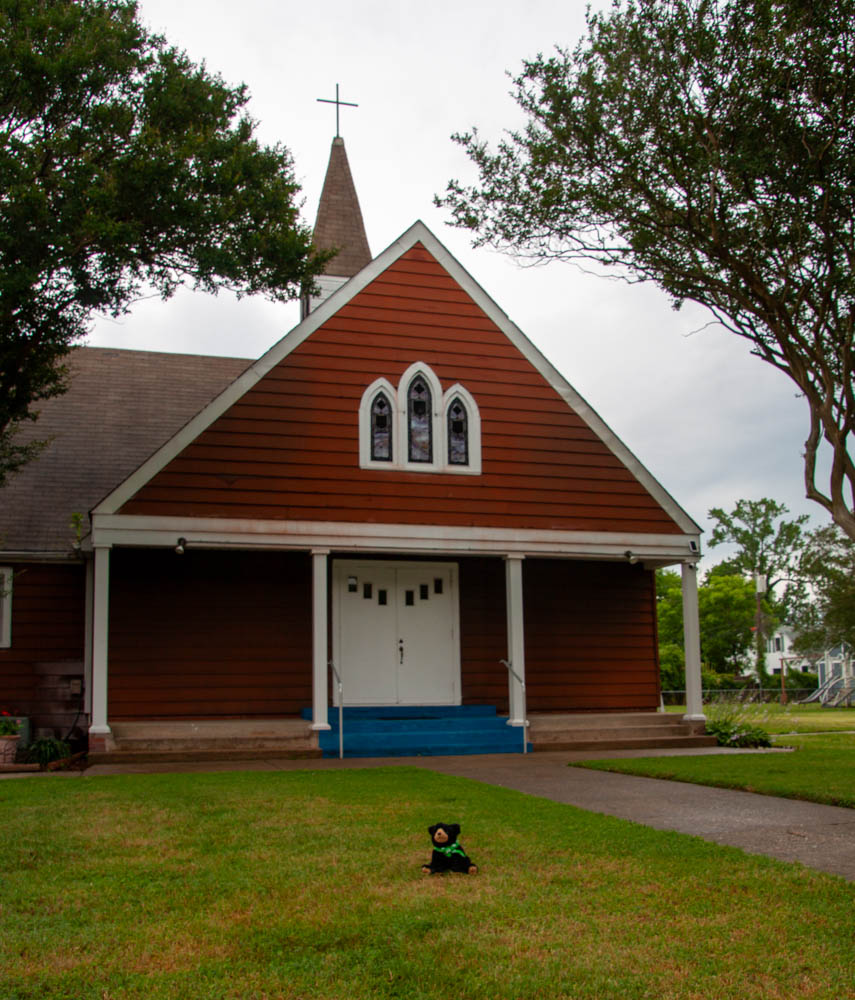
The first Lutheran services on Kecoughtan Road were held further down the street in the former Wythe Community Center at Catalpa Avenue in 1921. Pastor Louis J. Roehm of Norfolk’s Trinity Lutheran Church (Missouri Synod) came over once a month to lead the services until about 1931. It wasn’t until the early 1940s that the Lutheran Church–Missouri Synod resumed services on the lower Peninsula. This time it a few miles west in Downtown Newport News. This congregation purchased the present site in Wythe in 1943 and opened the church the next year. Emmanuel Lutheran later moved several miles north to Semple Farm Road near Hampton’s border with York County and this building became the home of Emanuel Grace Baptist.
That is the end of this post. Winter visited all the churches not only on Kecoughtan Road, but on US-60 as it follows 25th Street and 26th Street into Newport News. So there is much more to post when I make the time. For the second post click here.
References
Brown, Chester. “Religion’s Special Role.” Chapter 3 of Hampton From the Sea to the Stars, 1610-1985. 1985.
 Chasing Churches
Schools, churches, an adventure.
cjsmissionaryministry@gmail.com
LikeLike
[…] Road in Hampton, Virginia. It will then extend westward following US-60 to downtown Newport News. Click here for the post on the first six churches. All photos were taken while pedaling to the churches on a Schwinn Corvette II and feature Winter […]
LikeLike