Birmingham Churches and their Cornerstones 112
In 1910, the Methodist Protestant Church organized a mission in Birmingham’s West End neighborhood. The denomination was formed in 1828 by members of the Methodist Episcopal Church (MEC) who objected to the unbridaled authority of bishops in the MEC. It had a few churches in the Birmingham area, notable the one church near the Cahaba River that eventually became known as Cahaba Heights United Methodist Church. It was founded in 1879.
The Methodist Protestant Church reunited with the MEC (and the Methodist Episcopal Church, South) in 1939 to form the Methodist Church, and this West End congregation became known as Beverly Methodist Church. Beverly Station is the name of the neighborhood in which it was located. The cornerstone of its sanctuary building was laid in 1960. It appears to have been the last unit completed on the site and encompasses the location of an earlier, narrow church on the same site. Details can be folllowed through the clipping file on the church in the Birmingham Public Library’s Digital Collection.

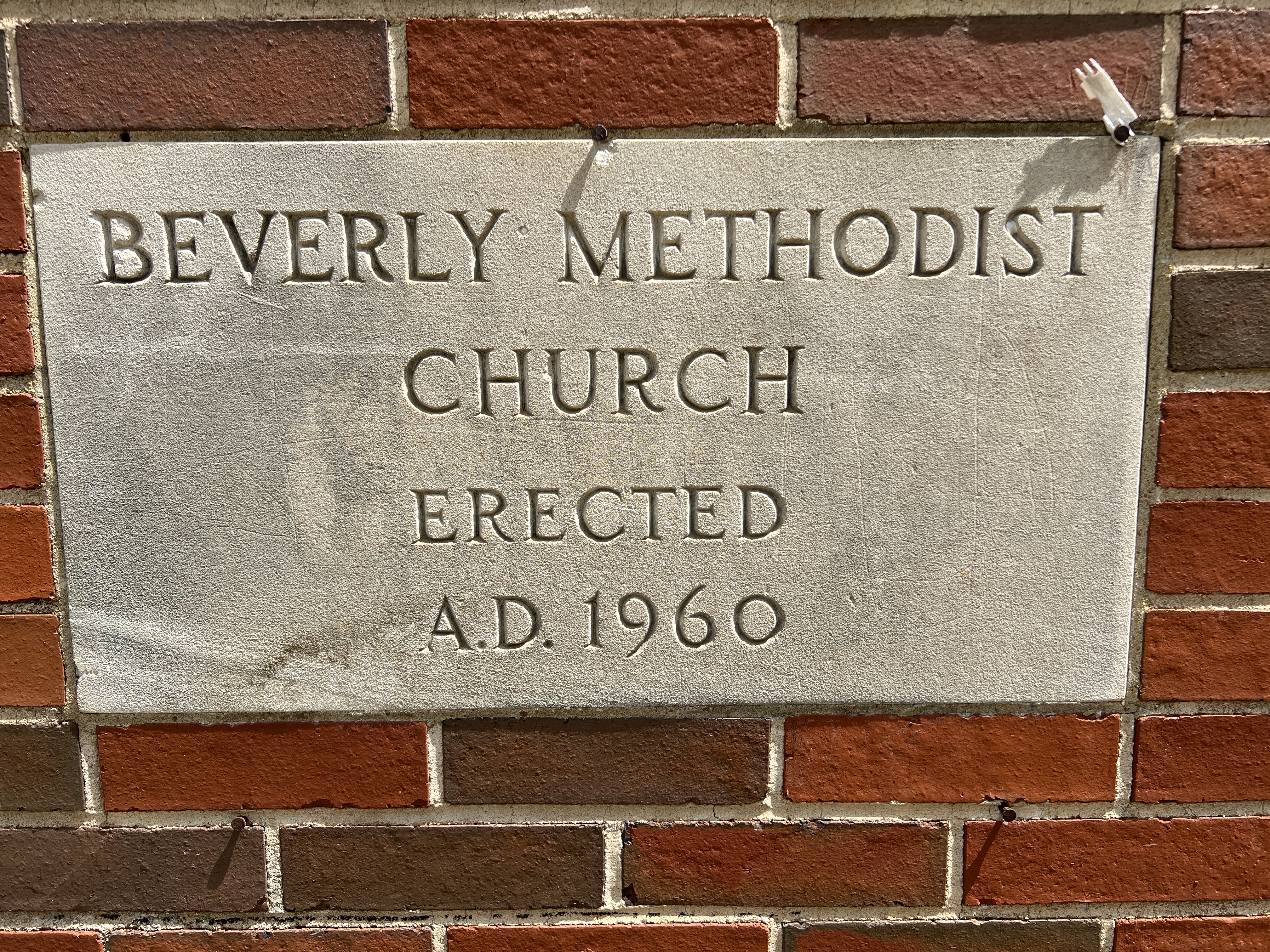
I assume, but have not confirmed, that when the nearby West End United Methodist Church closed it merged with Beverly. Beverly in turn merged with Aldersgate United Methodist in 2009. That congregation later moved to Ross Bridge and became the Church at Ross Bridge, which in 2022 became an independent church in the Methodist tradition. This one might say the church’s history of its relation to other Methodists is one of schism to unity to schism.
The same story of unity to schism (or from denomination to independence) can be told of the congregation that now owns the buidling, New Generation Apostolic Church of God. Founded in 2010 by long-time Apostolic Overcoming Holy Church of God pastor, Bishop Robert Ray, it states it uses “the same doctrine as the A.O.H. Church of God” but nonetheless is independent. Presumably, as with the schism between the Methodist Protestant and the Methodist Episcopal churches, this is because of differences in polity.
For more information, see Beverly United Methodists’s entry on Bhamwiki and related entries. Read this first post for more on this series on Birmingham churches and their cornerstones.
Map of Posts in this Project
The color and shape of the location markers indicate the character of the cornerstones at each site. Stones like these, with multiple names, are represented by red markers. When, as here, there are multiple stones, the marker includes a square. Click here for full information on the markers.
 Chasing Churches