Birmingham Churches and their Cornerstones 91
Trinity United Methodist Church was established the growing Edgewood neighborhood of Homewood, Alabama, in 1926. Like neighboring Episcopal church, All Saints’, established two years later, it inherited its name, and some support, from a congreagtion that had recently been disbanded in the eastern section of Birmingham’s Southside.
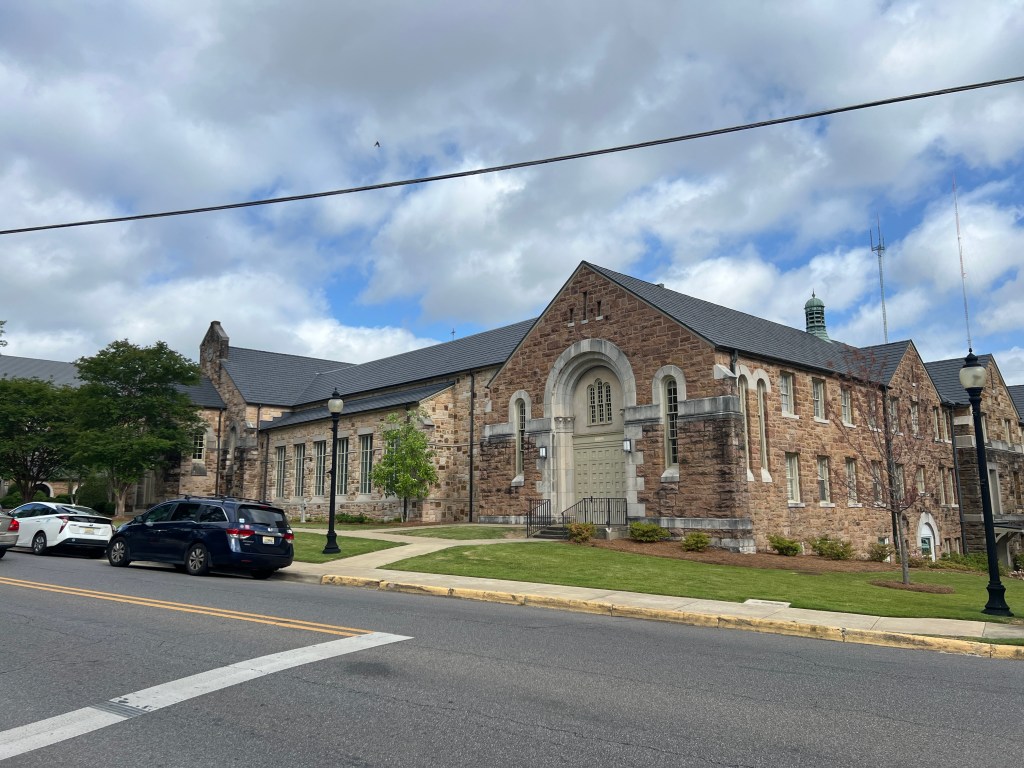
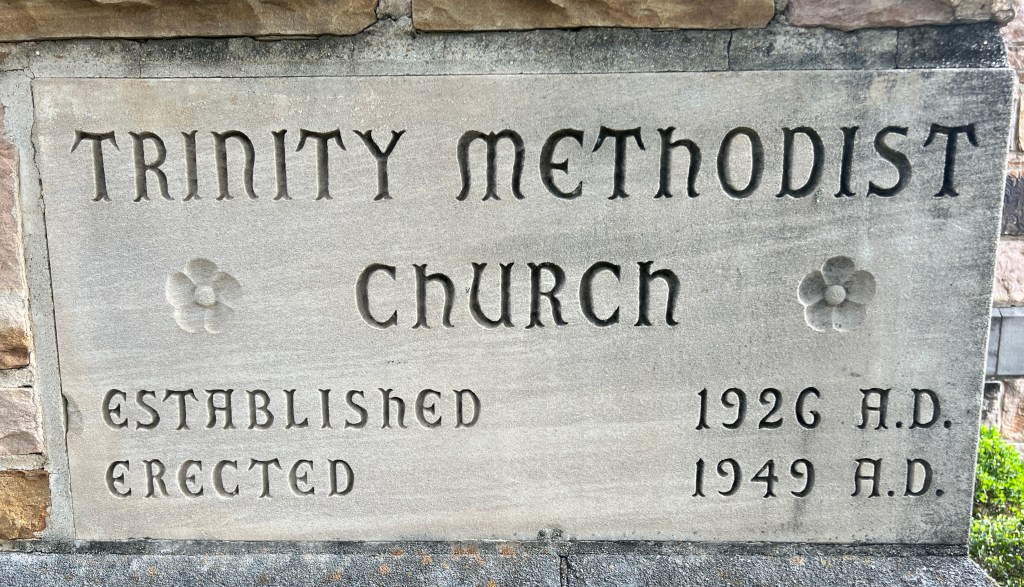
The church’s campus takes up the whole 1400 block of Oxmoor Road (between Clairmont and Semnolie drives). It is the product of at least four major building campaigns, but only two are commemorated by cornerstones. The original plan was designed by Warren, Knight, and Davis and its first phase was erected in 1928. The rest of the complex was finished in 1950. The cornerstone dated 1949 was placed outside of the sanctuary (now known as Wesley Hall). Recently a former courtyard was infilled with another addition to provide for a large space for contemporary worship, there is no cornerstone on this addtion.
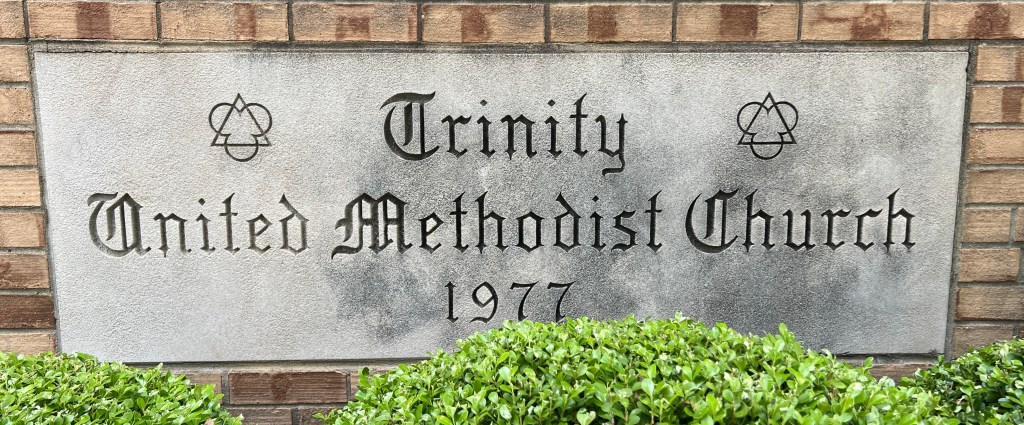
A later expansion included a much larger sanctuary and took the building to the west end of the block. It was designed by Turner & Batson. Its stone is dated 1977. This 1970s addition embraced the Romaneque revival style of the original, but was faced in brick, not stone. The front entrance to the current sanctuary is now well shaded with crape myrtle trees, but the most used entrance is through the porte-cochère facing the parking lot.

For more information on the church’s history, see its history on its website and its entry on Bhamwiki. Also two of my students have written about aspects of the church for Magic City Religion. Access their essays here. Read this first post for more on this series on Birmingham churches and their cornerstones.
Map of Posts in this Project
Each site in this project is mapped below. Clicking on an icon will bring up a box with a link to the post on the site. Please use it to browse the collection.
The color and shape of the location markers indicate the character of the cornerstones at each site. Stones like this, with only the church name and date, are light blue. Ones with multiple names are red. If there is more than one stone at the site a shape is used. Click here for full information on the icons.
 Chasing Churches