Birmingham Churches and their Cornerstones 90
First United Methodist Church sits in downtown Birmingham on the southwest corner of 6th Avenue North and Nineteenth Street. Erected in 1891, I believe it is the oldest building with a dated stone in this series.

The Richardsonian Romanesque auditorium church was designed by the firm of Weary and Kramer of Akron, Ohio. In lecture I’m inclinded simply to credit George Washington Kramer since he wrote the book The What, How, and Why of Church Building. But as with many architectural partnerships, I expect that while Kramer sold the product, it was Weary who made sure that they not only didn’t fall down, but worked.
When I moved to Birmingham in 1999, First Church was one of the first three United Methodist Churches I visited. My first Sunday, I parked on Nineteenth Street and entered the door on the right side in the picture above. To my surprise, that led me into the sanctuary next to the pulpit. It was well before the service, so no one saw my embarrassment.
While this was one of the original entrances into the church, since a 1970s renovation the main entrance has been off of the mid-block courtyard. That is the way I have found my way in on subsequent visits. The cloister of the 1960s addition to the campus affords a lovely view of the clerestory that lighted the old Sunday school rotunda and still lights the back of the sanctuary.

One of the church’s restorations took place in the early 2000s, not long after I moved to Birmingham. It involved cleaning a century of Birmingham smoke and grime off of the building. I recall The Birmingham News reporting at the time that care was being taken to clean and preserve the stone, but not to take it back to its original much lighter “pink” color. I’m familiar with that color stone from churches of the same style and age in Virginia, such as First Baptist in Newport News. But twenty-first century Birmingham Methodists didn’t want it. In part, perhaps, because the adjoining 1950s and 1970s building were built in a dark brick to match the darkened church. I believe the original color of the stone is visible where the stone has been more recently on the lower left of each entrance shown above.
The name and date stones for the original building do not appear on a lower corner, but in the tympana above the two Nineteenth Street entrances to the church. Below one is pictured above my head and there are telephoto pictures of each taken from across the street.
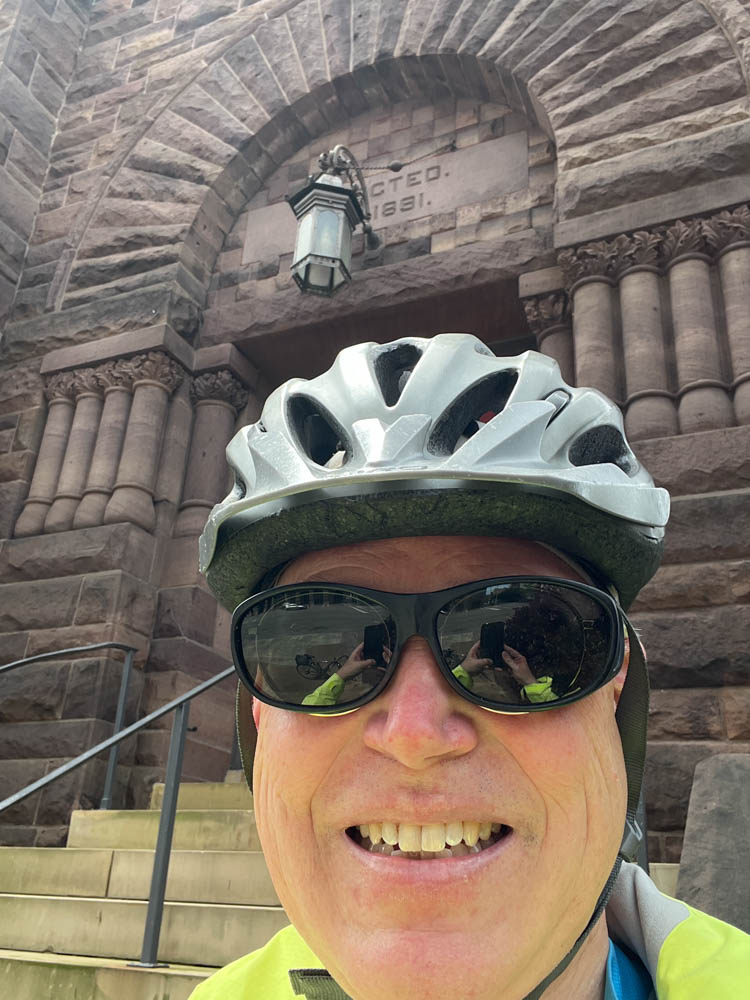
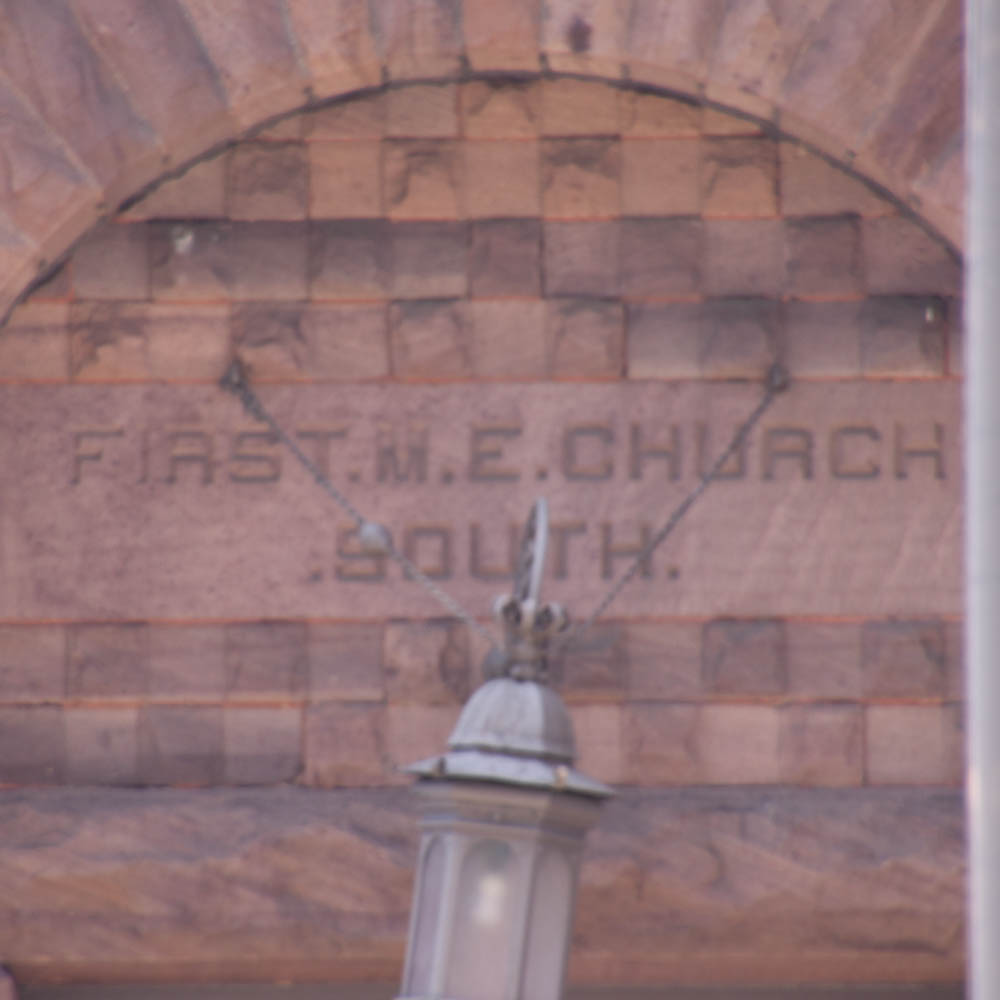

The cornerstones on the church’s two major additions are much simpler. The 1950 stone actually appears on a 1921 building to mark an extention added to it in 1950.

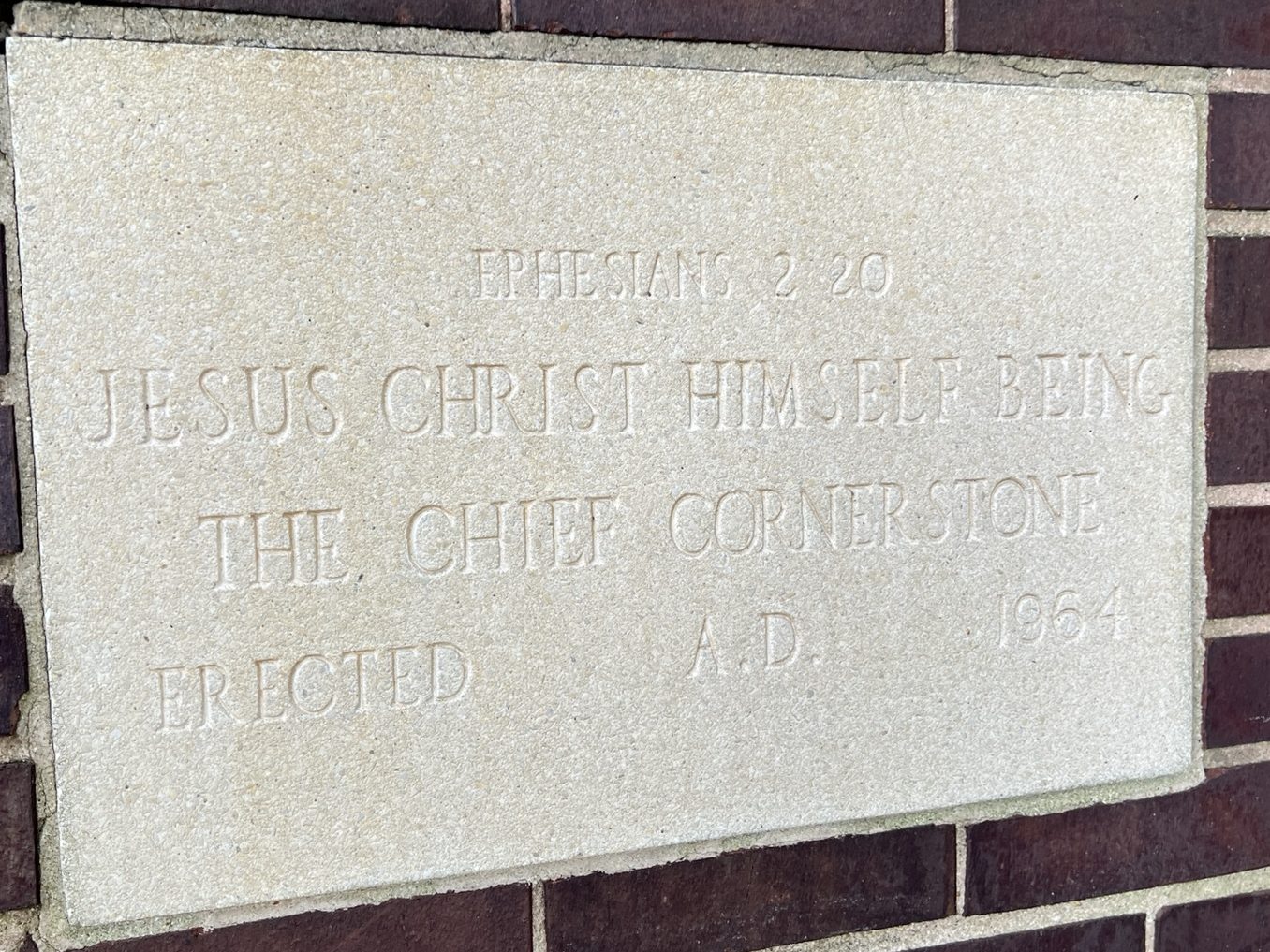

For more information on the church’s history, see its history on its website and its entry on Bhamwiki. Last spring, a student in my History and Theology of Christian Worship class wrote an essay on the church’s traditional worship service for our Magic City Religion website. You can read that here. Read this first post for more on this series on Birmingham churches and their cornerstones.
Map of Posts in this Project
Each site in this project is mapped below. Clicking on an icon will bring up a box with a link to the post on the site. Please use it to browse the collection.
The color and shape of the location markers indicate the character of the cornerstones at each site. Stones like this, with only the church name and date, are light blue. Ones with multiple names are red. If there is more than one stone at the site a shape is used. Click here for full information on the icons.
 Chasing Churches
This is beautiful scenery.
cjsmissionaryministry@gmail.com
LikeLike