Churches (and a Synagogue) in Williamsburg, Virginia: An Alphabet
Over the past 324 years, Williamsburg, Virginia, has been many things: Virginia’s capital, county seat, college town, historyland, tourist Mecca, outlet center, retirees’ haven, and the place I met my wife. It is also home to an interesting variety of religious buildings. Yes, a lot of them are red brick with white trim, but there are more! So here is an alphabet of 26 Williamsburg churches. I think it includes all the churches in “downtown Williamsburg.” Others are elsewhere in the city or its neighboring counties. Enjoy!
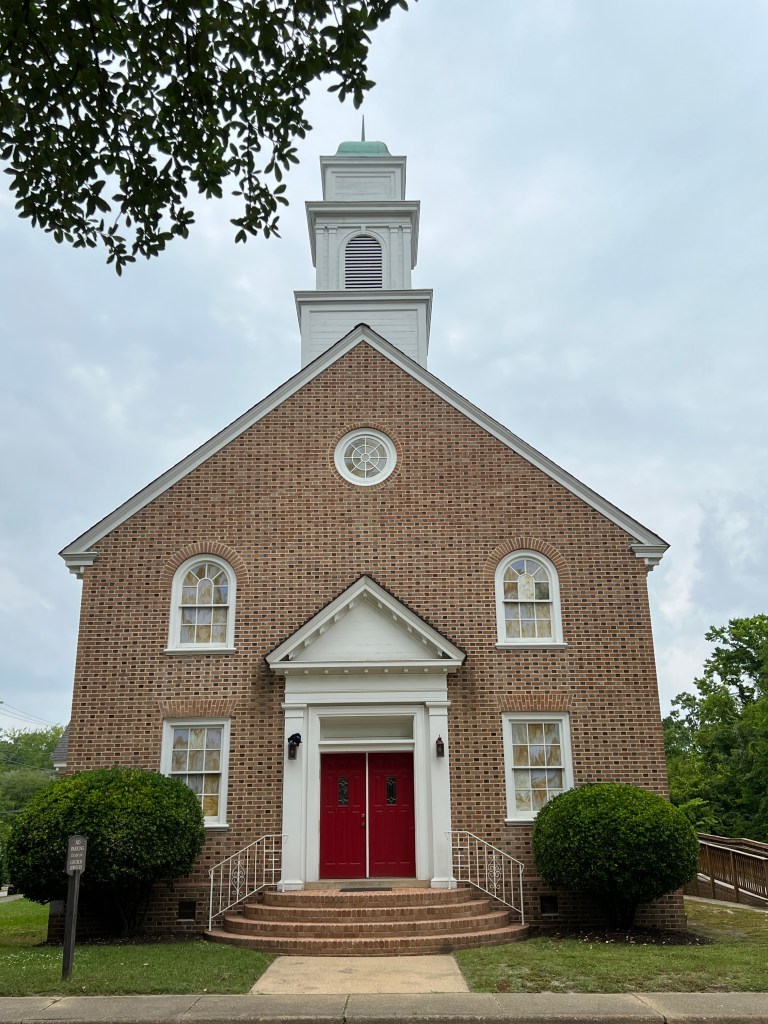
A is for Ararat—Mt Ararat Baptist
This is the closest current house of worship to the Capitol, but if you aren’t a church member of a Colonial Williamsburg (CW) employee, you’ve probably never seen it. It sits just outside this historic area, surrounded by CW employee parking and offices. The congregation was organized by African Americans in 1882. An earlier clapboard building was on Francis Street is shown in a 1910 history of the church. During the Restoration of the town to its eighteen-century appearance, this first Mt. Ararat was taken down and this new colonial revival brick building constructed in 1932.
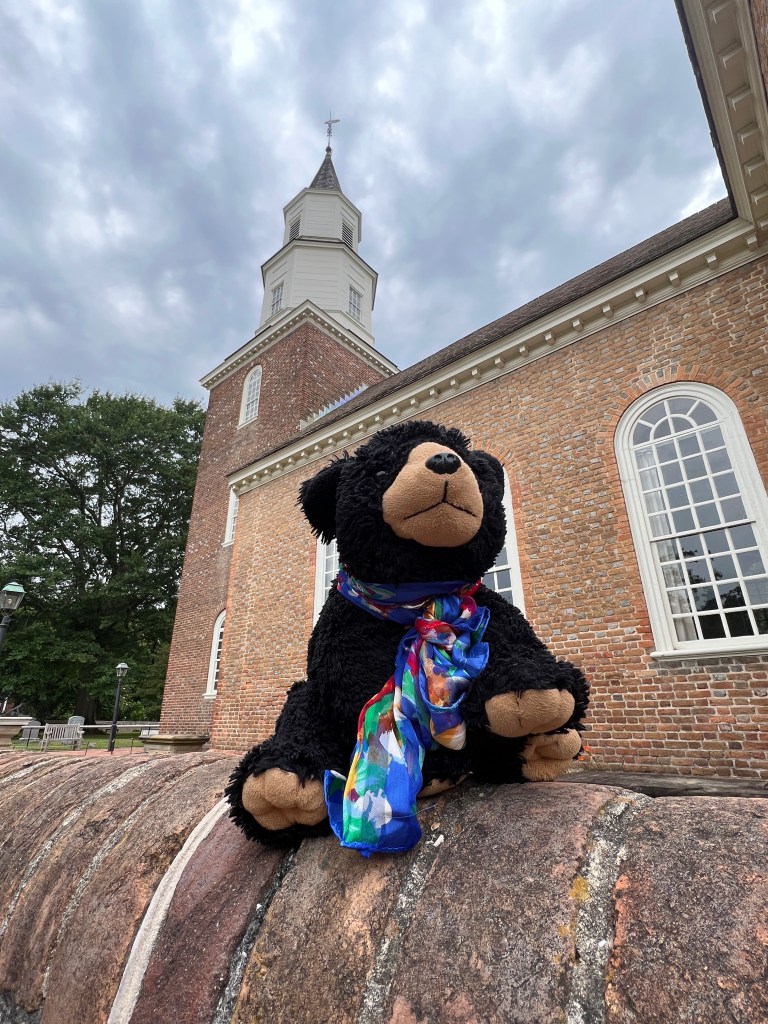
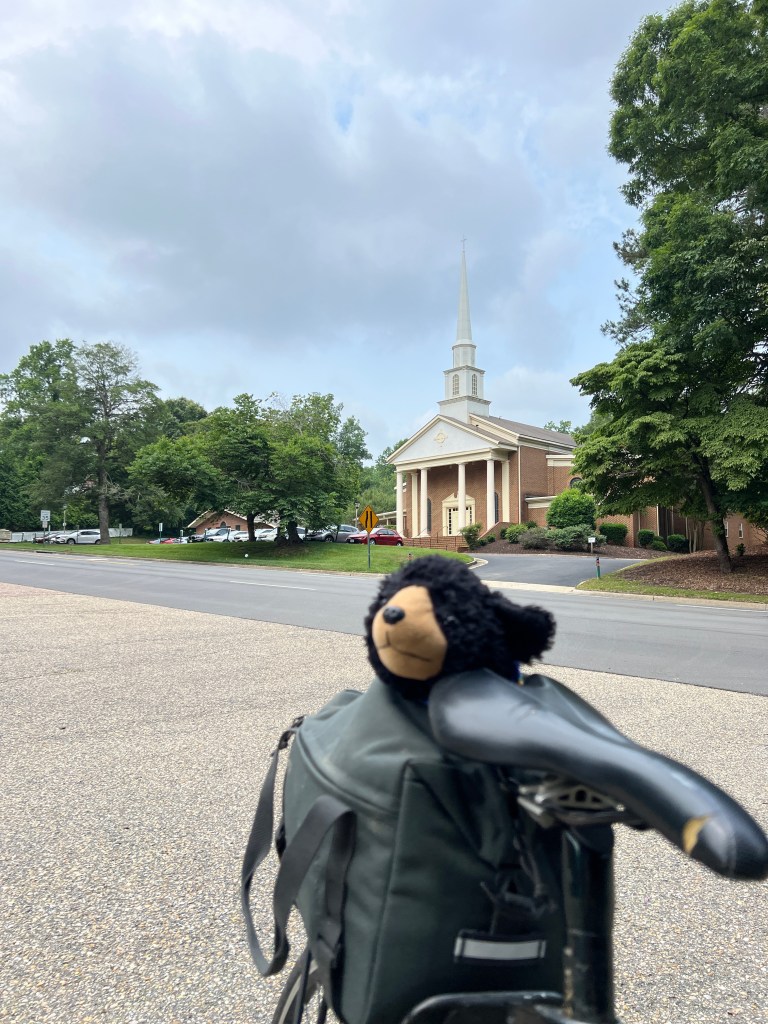
As in my previous alphabets of churches in other cities a Black Bear plush toy can be found in all photos. (In the above, look at the lantern to the left of the door). In most the bear is Winter She starred in the previous alphabets. In a few photo the bear is Winter’s smaller new associate, Fred. Both were crafted by Wild Republic and purchased by my wife on trips to national parks in the western U.S. Here they are in their inaugural jaunt (June 2023) to see Cody United Methodist Church in Cody, Wyoming, just two blocks from where Martha acquired Fred.
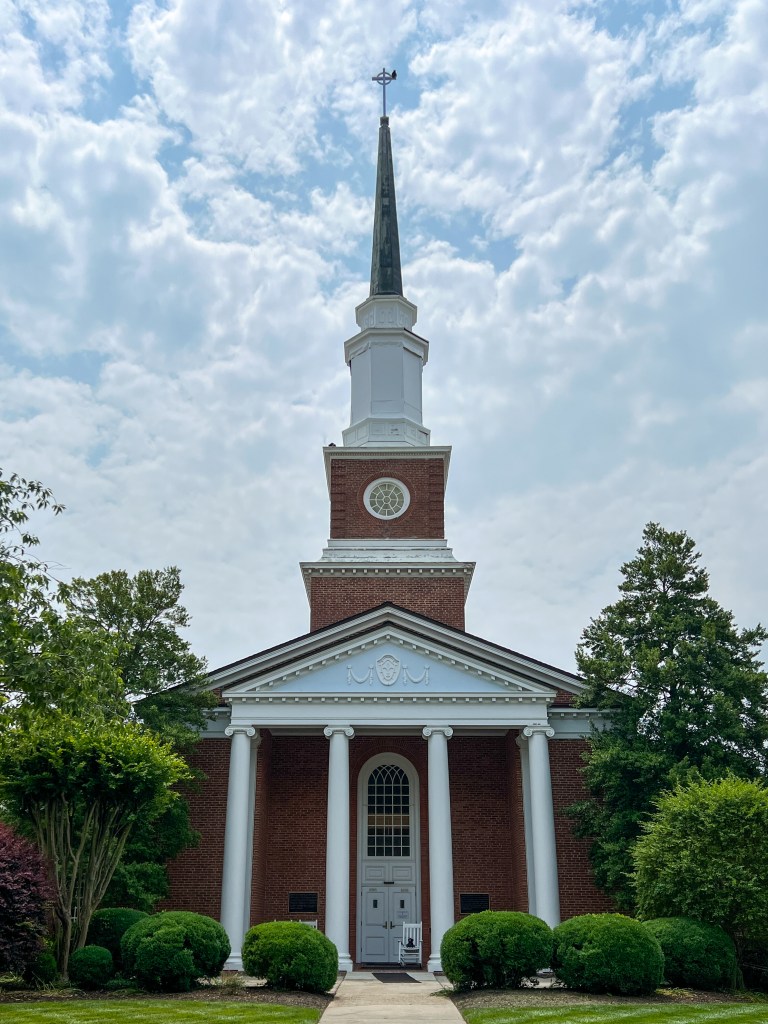
Williamsburg Baptist Church was founded in 1828. It is the historic White Baptist Church in Williamsburg, prior to the Restoration it occupied first the colonial Powder Magazine and then a stately Greek Revival church next to it. Like Mt. Ararat, and many other churches in this alphabet, Williamsburg Baptist had to move during the restoration. This stately edifice was erected on Jamestown Road in 1933.
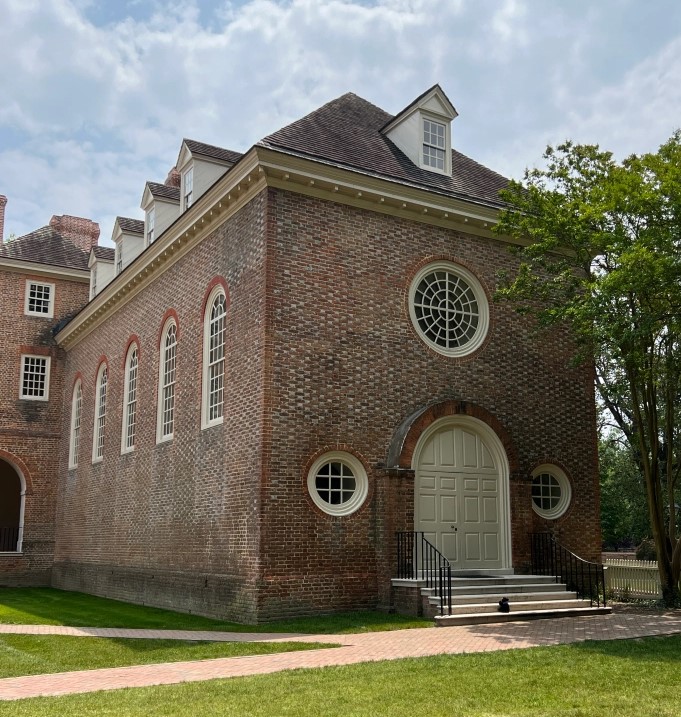
If it had not been closed for renovation for 18 months, this is where Martha and I would have been married in 2000. The Wren Building at the College of William and Mary was begun in 1695. I’ve been to lots of memorable services there, including a Palm Sunday service in 1993 conducted as it would have been in the colonial period. This was part of the spring meeting of the American Society of Church History held in connection with the college’s tricentennial. My undergraduate mentor, David Holmes preached.
The oldest congregation forced to move for the restoration was First Baptist Church of Williamsburg, organized by African Americans in 1776. They had erected a succession of at least two buildings on the site, the second in 1856. It was this building that was taken down during the restoration. The congregation moved and is now in a building coming up as letter F. In May 2020 the site, which had been a parking lot for decades, was surveyed by radar and excavations begun thereafter. They have discovered both the foundations of buildings and the graves of congregation members. (More information here and in many articles online.)
This reconstruction of an eighteenth-century Presbyterian Meetinghouse was funded by the Lilly Endowment. It was constructed around 2014. The Lilly Endowment has been funded by the Lilly family, largely with stock in Eli Lilly and Company, the pharmaceutical company. The Endowment is a major presence in the funding of scholarship on American religion. The archaeological investigation of First Baptist Church (D above) and its interpretation has thus far received $5.5 million from the endowment. My career has also benefited from the endowment’s support. Thus I often call it “Uncle Eli.” This meeting house is important for showing that not everyone in colonial-era Williamsburg was Anglican. For more on Presbyterians in Williamsburg see P below.
F is for First—First Baptist
Founded in 1776, First Baptist Church is the oldest congregation in this alphabet that is not Episcopalian. This Georgian revival building has been its home since 1956. It is close to First Baptist, but not on Richmond Road, but on the less prominent, Prince George Street. (For its earlier site see D above.)
Williamsburg is sometimes called the “pancake house capital of the world.” Its pancake houses is something the bears and I will leave to others to enumerate. But we will testify to the important role of Greek immigrants and their descendants in the restaurant industry in Williamsburg, Charlottesville, Birmingham, and throughout the south. St. Demetrios is named after the Thessalonian martyr of the early 4th century, the building was completed in the 2010s. I first learned of the building plans from a picture and a donation box at the next to the register at New York Deli.
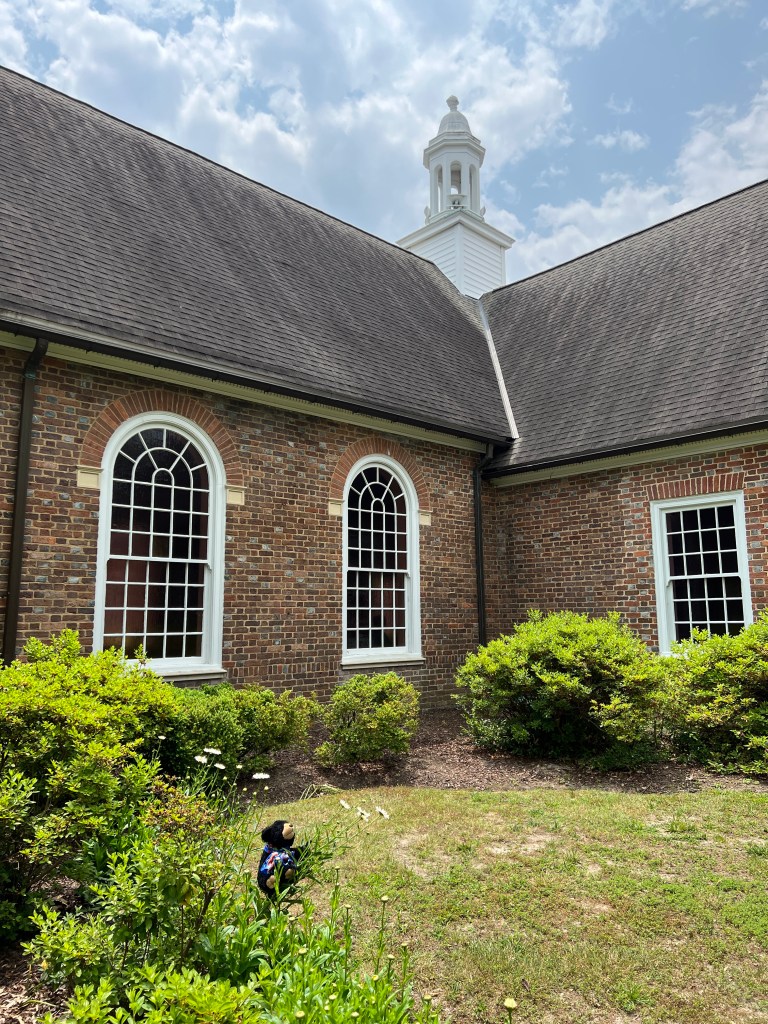
After Bruton Parish (see O), Hickory Neck is the second oldest church in this series. Like Bruton, it is an Episcopal Church. It is just west of Toano on Richmond Road, about eleven miles from Bruton. What you see here is only a part of the colonial edifice that stood on this site. It was erected in 1734 and is on the National Register of Historic Places. The congregation holds most of its services in a new larger building dedicated in 2006.
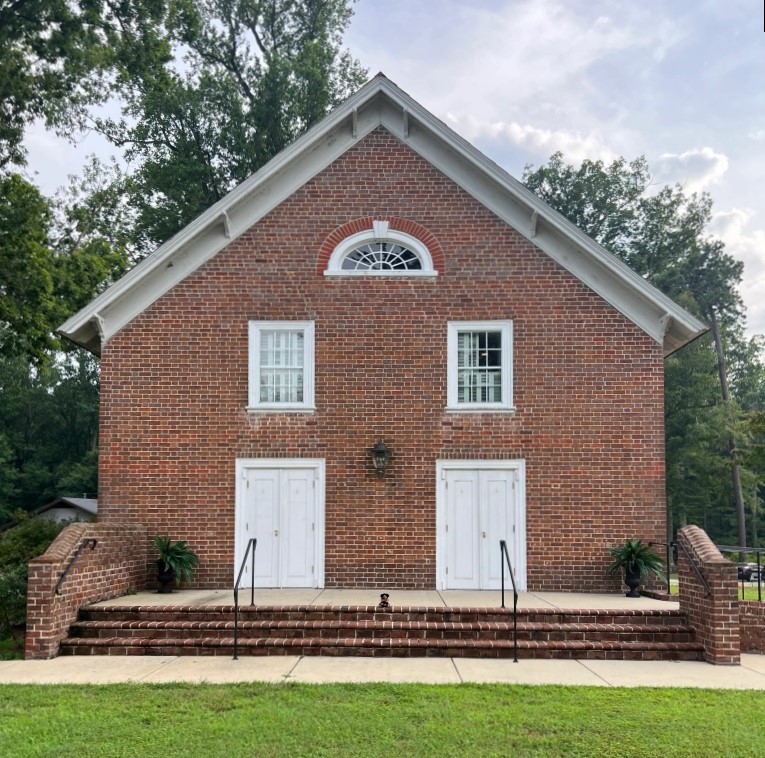
Olive Branch Christian Church (Disciples of Christi) is set on large peaceful piece of land just west of Norge on Richmond Road, about nine miles from the historic area. It was erected in 1835.
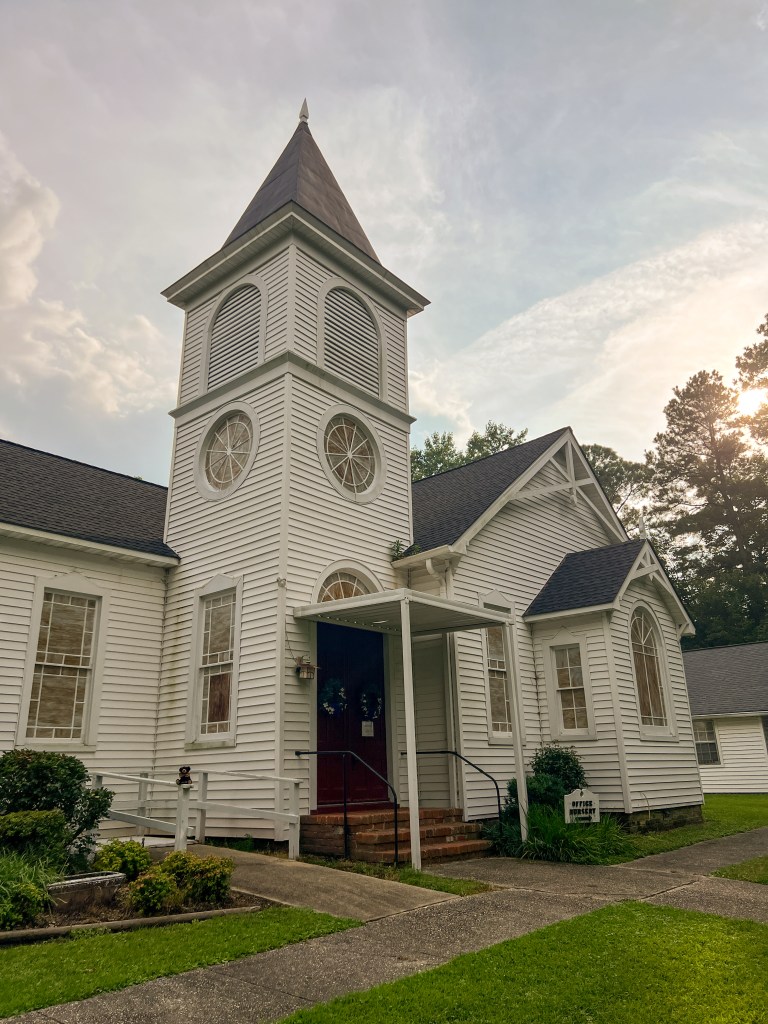
When arrived at this building on Ironbound Road in June 2023 they were putting a new roof on the 1995 sanctuary building of this Presbyterian Church (USA) congregation. It dates to 1895, but was only officially organized in 1920.
This Lutheran Church—Missouri Synod congregation was established in 1991. It operates a school on site and recently expanded its buildings including its sanctuary.
On Jamestown Road, next to a bed and breakfast with a lovely flower garden, sits St. Stephen’s, a congregation of the Evangelical Lutheran Church in America organized in 1956. It held its first service in Wren Chapel and began erecting this church just down Jamestown Road in 1962.
St. Martin’s Episcopal Church began worshiping on this site, donated by Bruton Parish Church by Easter 1964. The part of the sanctuary shown above was erected in 1972. I attended a wedding here in the 1990s and was surprised by how the church’s buildings have now expanded.
In 1932 the St. Bede’s Catholic Church was erected. It had grown out of the Gibbons Club, a Catholic student association started in the 1920s at William & Mary. The 1932 section can be recognized by the darker bricks in the circle top windows on the left. In 1941, a statue of Our Lady of Walsingham was installed by Fr. Thomas Walsh and it was blessed as her national shrine. St. Bede’s has now erected a much larger building on a suburban site (see R), so this historic chapel has been renovated and uses the Walsingham name.
Bruton Parish Church is the oldest church building and congregation in Williamsburg. It is also the most photographed. The parish was formed from the consolidation of other parishes in 1674. The first church building was completed in 1683 in a Gothic style. After the creation of the College of William & Mary in 1693 and the designation of Williamsburg as the colonial capital in 1699, the old church was too small. The main part of the current building was completed in 1715 with the tower added in 1770.
As the reconstructed Presbyterian Meetinghouse (E above) suggests, there was a registered Presbyterian congregation in colonial Williamsburg established in 1765. But it did not survive the decline of the town after the capital moved to Richmond in 1780. It would not until 1860 that Williamsburg Presbyterian was organized. It erected a building on Palace Green on land it purchased in 1885 and remained there until the restoration required it to move to the current location in 1930.
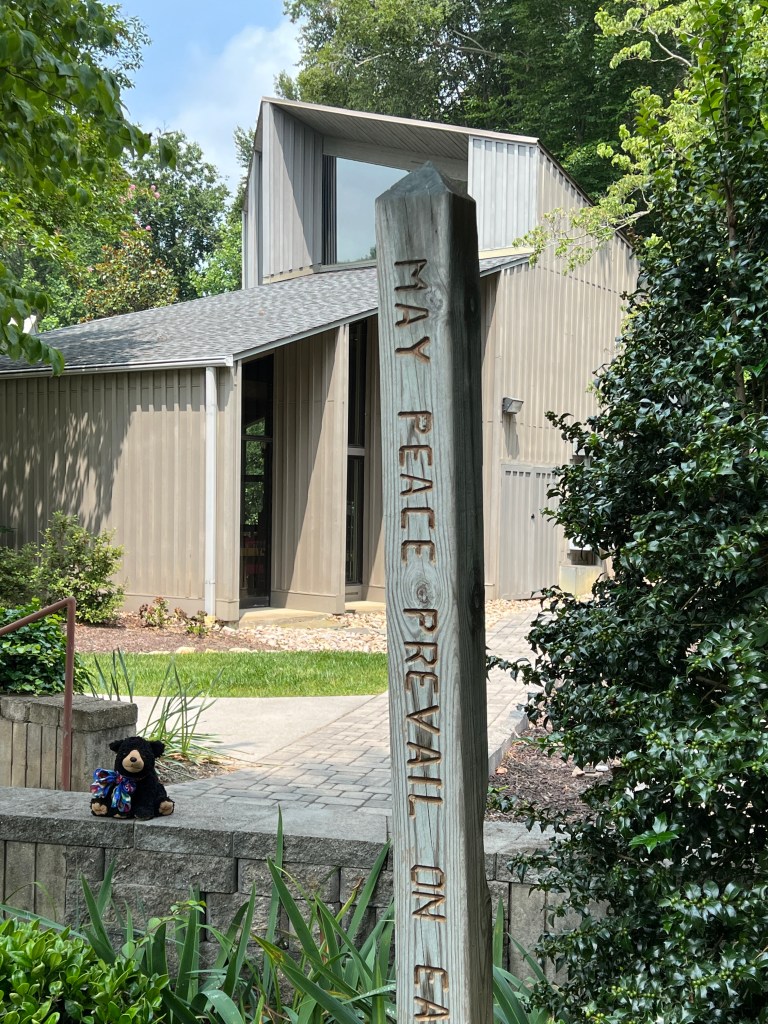
Winter and I went out Ironbound Road to “capture” the Unitarian Universalist Church. And low and behold in front of it were the Friends! This rancher is part of the campus of the UU church. The UU congregation held its first public meetings in 1988, was chartered in 1989 and opened its sanctuary building in 1995. The Friends have been meeting since before 2011, but we are not sure how long.
The central worship space of St. Bede Roman Catholic Church is round. The altar is at the center underneath the cross and lantern in the center of this photo. Yes, the rest of the complex is a bit “overbuilt” — but if you want a big round church with the altar at the center. This is your church! The parish was established in 1939 (seven years after its first church was built see N). This church was dedicated in 2003.
Christian Science meetings in Williamsburg date to 1919, the present building on Jamestown Road joins a string of houses of worship (see also L, T, and U) that were erected after World War II opposite the expanding campus of William & Mary. This one was built in 1957 in the Georgian Colonial style which was then at the peak of its popularity.
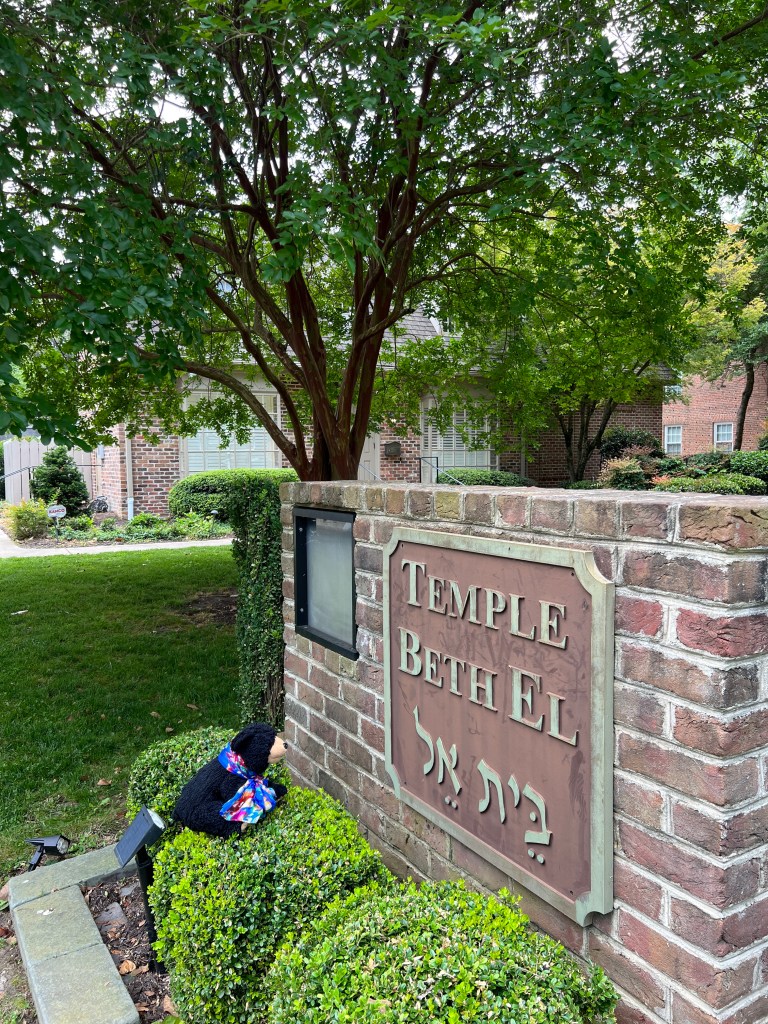
Temple Beth El is the only synagogue in the Williamsburg area. It was founded in 1959, its building is a former gift shop that was moved to this site on Jamestown Road near other houses of worship in 1968. Throughout its history, the congregation has remained unaffiliated with any denominational movement. For more on the history of Jews in Williamsburg see here.
Methodism began as a movement within the Church of England, and in Williamsburg dates to a 1772 visit by Joseph Pilmore. Early Williamsburg Methodists met in small groups, but remained communicants of Bruton Parish. The congregation began meeting separately in the early 1800s, and erected a brick church on Market Square in 1842. In 1926 it moved to a larger building, at the corner of Duke of Gloucester and North Boundary Streets and remained there, on Merchant’s Square, until erecting the current structure 0.35 miles away in 1963.
Walnut Hills sits on Jamestown Road, but on the east side of Lake Matoaka from the college and the other churches. Organized in 1964, it has been at its current site since 1969, the sanctuary you see here was dedicated in 1987.
Like Y, X is always a challenge in these alphabets. Williamsburg has no churches named for Francis Xavier, no former church buildings to be “ex-churches” worth mentioning, etc. So it is just a wildcard and a good excuse to picture the only church visible from Diascund Creek on the James City County line. Located in New Kent County at Lanexa, Liberty was organized in 1830 and dedicated its first building on this site in 1852. The impressive large white church congregation meets in today opened in 1930.
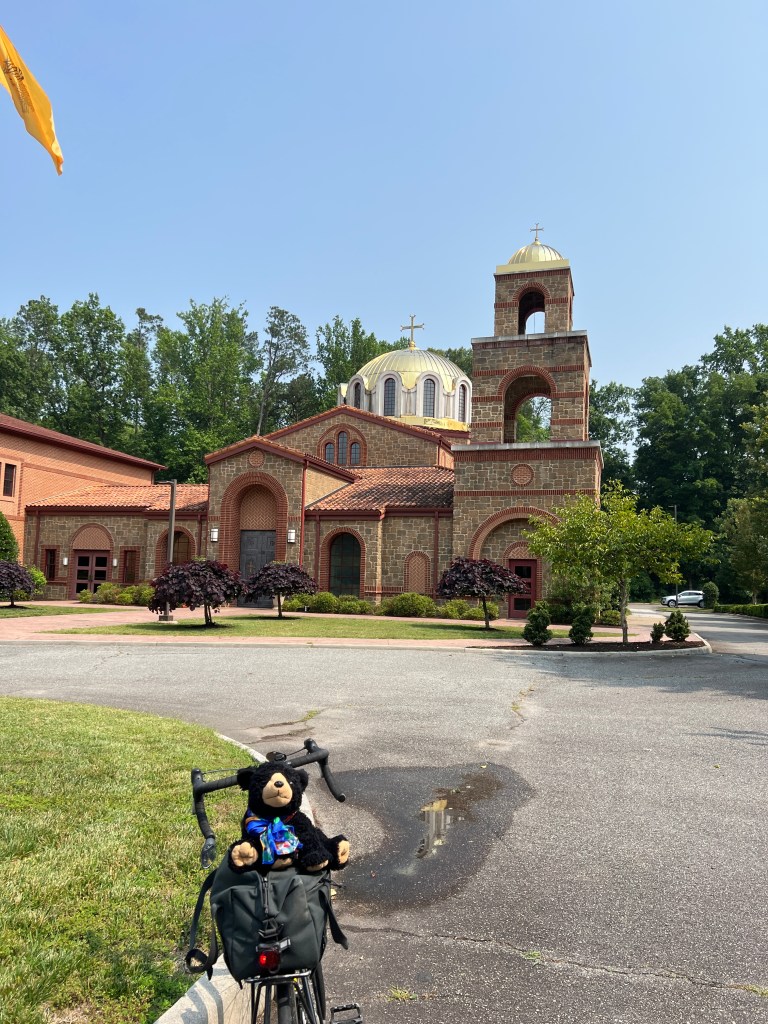
Y is not the first letter in Byzantine, but it is the second. And when you are trying to finish a church alphabet, that is close enough. The church is just off the US-60 bypass near Cracker Barrel, Pizzeria Uno, and other American icons. It is also not far from St. Demetrios (G above). Formerly the Greensprings Community Chapel, these Byzantine-rite Catholics purchased this building in 1987. It has served them for over 35 years!
Z is for Zion — Zion Baptist
No stretching things here. Zion Baptist is on Richmond Road in Lightfoot, six miles from the historic area. It was organized in 1919. Many former members of the congregation are buried on the site. Valerie C. Matthews has been pastor since 2012.
Map of sites (all but the northern 5 were photographed by bicycle on June 8, 2023. The others were visited by car on July 18 or 19.











 Chasing Churches